2026 Presentation Sessions
Browse below for titles and descriptions of the many varied presentations being offered by the 2026 speakers. You’ll find talks on everything from night photography techniques to astronomy to business and more. And be sure to check back, as we have more great content to add to our lineup!
-
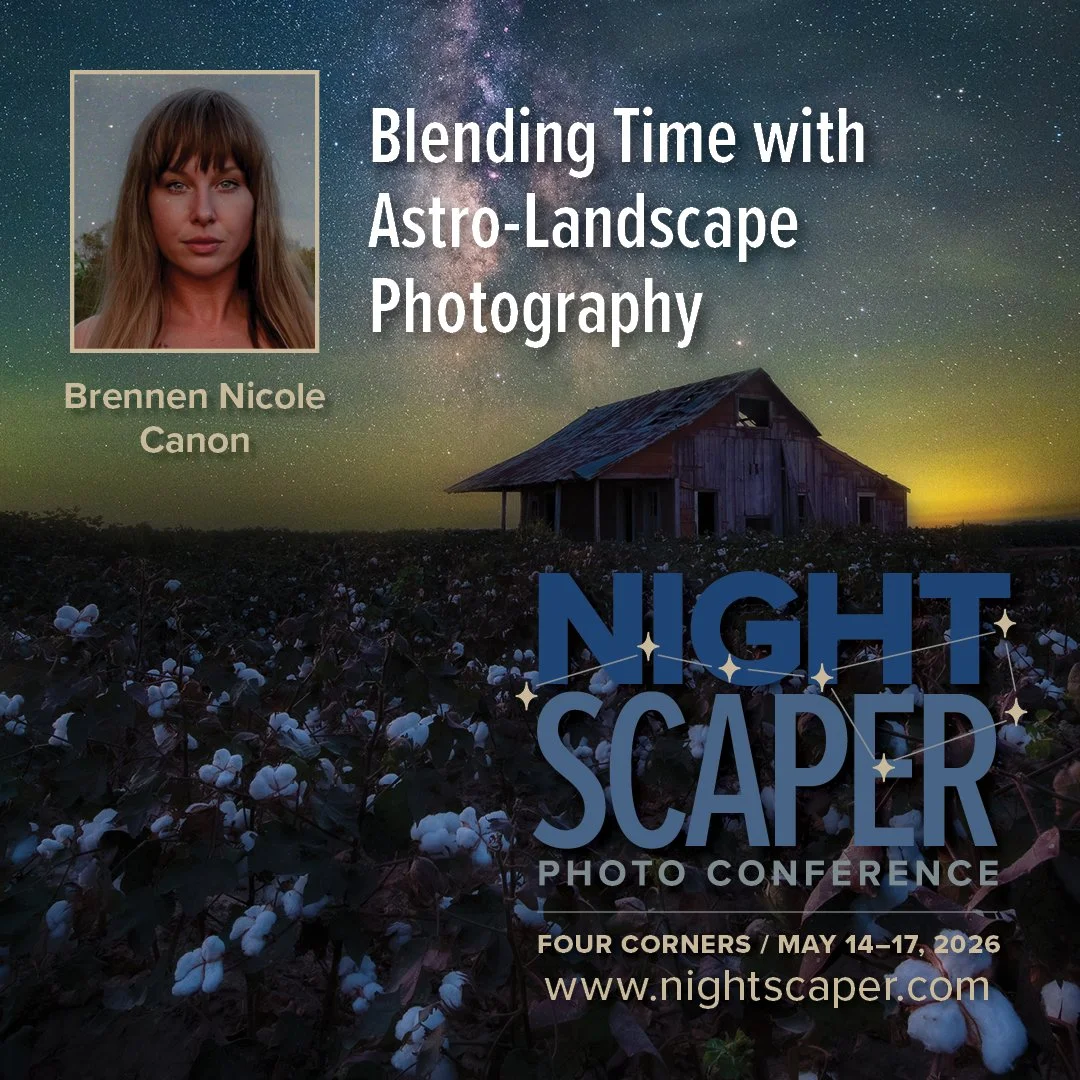
Brennen Nicole
Blending Time with Astro-Landscape Photography
This advanced presentation builds on the basics and dives into how modern astro-landscape images are truly created by blending moments in time rather than relying on a single exposure.
Brennen Nichole will explore the difference between blending and compositing, why the distinction matters, and how ethical, intentional blending can elevate your work while still honoring the integrity of the scene. You’ll learn practical techniques such as blue hour blending, median stacking, focal blending and noise reduction, along with when and why to use each approach.
Just as importantly, Brennen will also explore the philosophy behind blending time and how combining different moments can more accurately reflect how we experience the night with our own eyes. You’ll walk away with a deeper understanding of both the technical execution and the artistic intent behind advanced astro-landscape photography.
sponsored by Canon
-
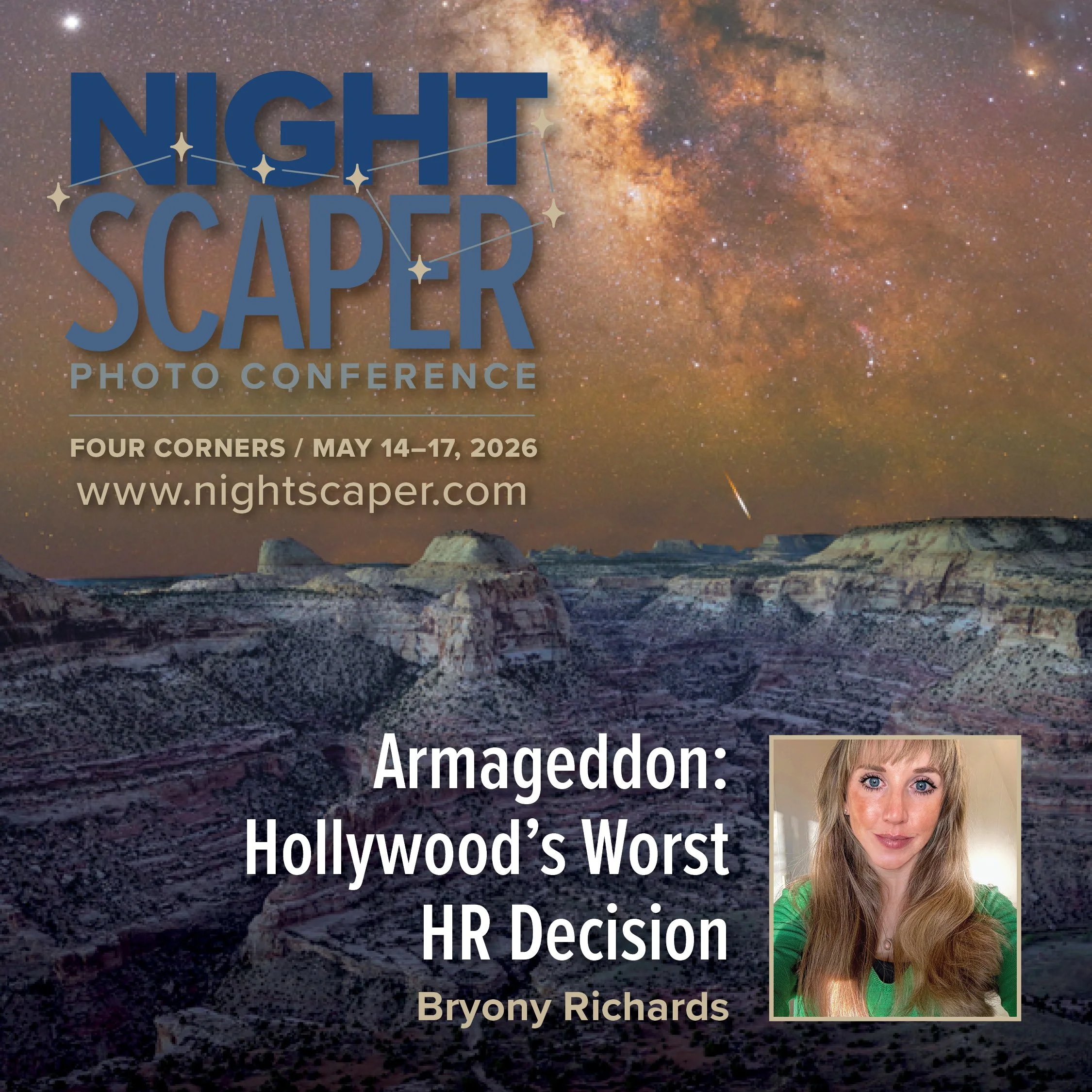
Bryony Richards
Armageddon: NASA’s Worst HR Decision
What do you get when a Texas-size asteroid threatens Earth? Apparently, oil drillers in space.In this parody breakdown of the movie Armageddon, Bryony Richards will dive into the science of near-Earth objects, the real dangers of asteroid impacts and why teaching Bruce Willis to astronaut was somehow easier than teaching astronauts to drill.
Spoiler: it’s all nonsense, but the kind of nonsense that lets us talk about the Tunguska event, impact craters and why nuking space rocks is a hilariously terrible idea (but great popcorn science). Real planetary defense never looked so sweaty and slow-mo. Buckle-up!
-
Bryony Richards
Interstellar: Black Holes, Time Warps, and Emotionally Compromised Physics
In this cinematic love letter to deep space and daddy issues, the film Interstellar launched us through wormholes, into black holes and onto planets where one hour equals seven years (because time dilation, obviously). But behind the emotional gravity lies real astrophysics, from the math behind spinning black holes to the structure of accretion disks.In this talk, Bryony Richards will use Interstellar as a jumping-off point to explore actual deep space objects, black holes, exoplanets and nebulae, paired with nightscape imagery that captures their echoes in our own sky. Because sometimes the most mind-bending parts of the cosmos don’t need CGI—they just need a long exposure and a clear night.
-
Cathrin Machin
Master Color Like An Artist
Learn to color-grade from the perspective of a world-renowned artist, Cathrin Machin.
So … You have the perfect setup. You’ve traveled to an amazing location. You’ve taken a wonderful shot. But when you review it, you know it has more potential.
Perfecting color is the difference between an average-looking photograph and one that overflows with magic. Create emotion and depth, and add a little sparkle with knowledge from beyond the camera. -
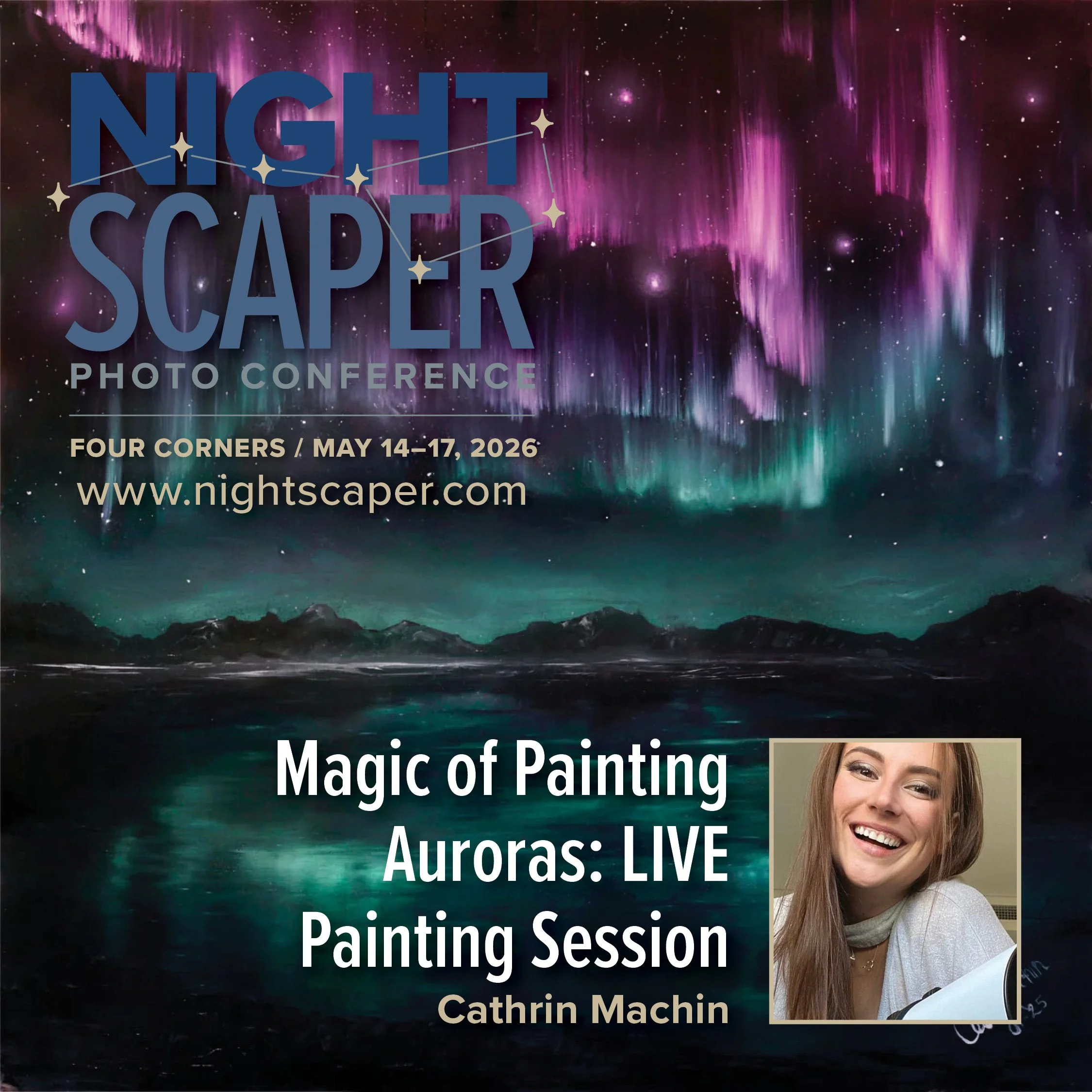
Cathrin Machin
Magic of Painting Auroras: LIVE Painting Session
Artist Cathrin Machin does something pretty unique in our astro-centric world. Yes, she photographs wonderful deep space objects, but that is only the starting point. And yes, she uses graphic design skills combined with Photoshop to move her images along.But then it starts to get different. That’s when the real black canvas comes out—not the “canvas” of the night sky that we often metaphorically talk about. She brings out a real black canvas—along with brushes and oils—to bring a new kind of creative eye to depicting celestial nebulae and constellations.
That’s right, Cathrin literally paints the cosmos. Moreover, her one-of-a-kind paintings are highly sought after and quickly sell out, leading her to constantly search the skies for more inspiration.
In this presentation, learn more about Cathrin’s process: how she creates these stellar paintings as well as what it takes to make a leap of faith forward as an artist.
-
Chris Nicholson
Natural Night: The Gentle Touch of Starlight on the Landscape
The largest obstacle in night photography is this: It’s dark outside.We can push the limits of modern cameras to reveal the beauty of the night skies. But as amazing as those capabilities are, the foreground of the image is almost always a challenge. While solutions for this problem exist, many of them result in a foreground that doesn’t appear in a photograph the way our eyes see it in person.
Natural light painting, blends, exposure, moon phases—all of them can play a role in creating a natural look to your night images. Join Chris Nicholson as he weaves a way through these options and more, showing multiple paths toward creating foregrounds that maintain a sense of apparent realism.
Sponsored by Night Photo Summit
-
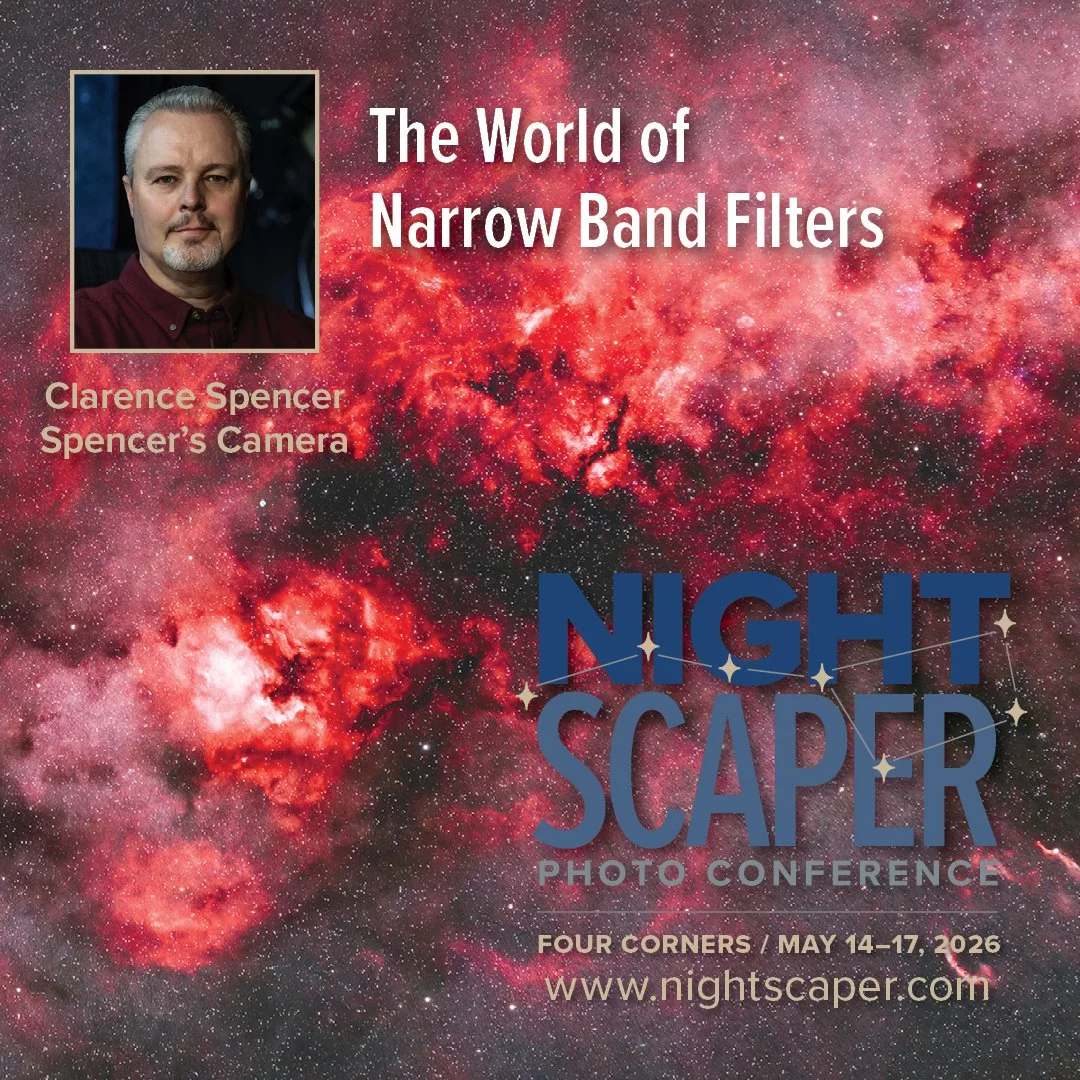
Clarence Spencer
The World of Narrow Band Filters
Want to create nightscape images that have more detail and that make nebulae and other deep sky objects pop? Narrow-band filters are the key to unlocking the dynamic colors of nebulae and other colorful celestial sights.
As the name suggests, narrowband filters capture a very small part of the visual spectrum: specifically, the wavelength emission lines of Hydrogen-Alpha, Sulfur-II and Oxygen III.
These filters also restrict light emitted from streetlights and light pollution, allowing for an excellent collection of deep-space light.
In this talk by astro-expert Clarence Spencer, he will navigate you through the many options of narrow band filters, will advise on what cameras and/or telescopes to best match them with, and will offer insight for best exposure settings and processing tips.
-
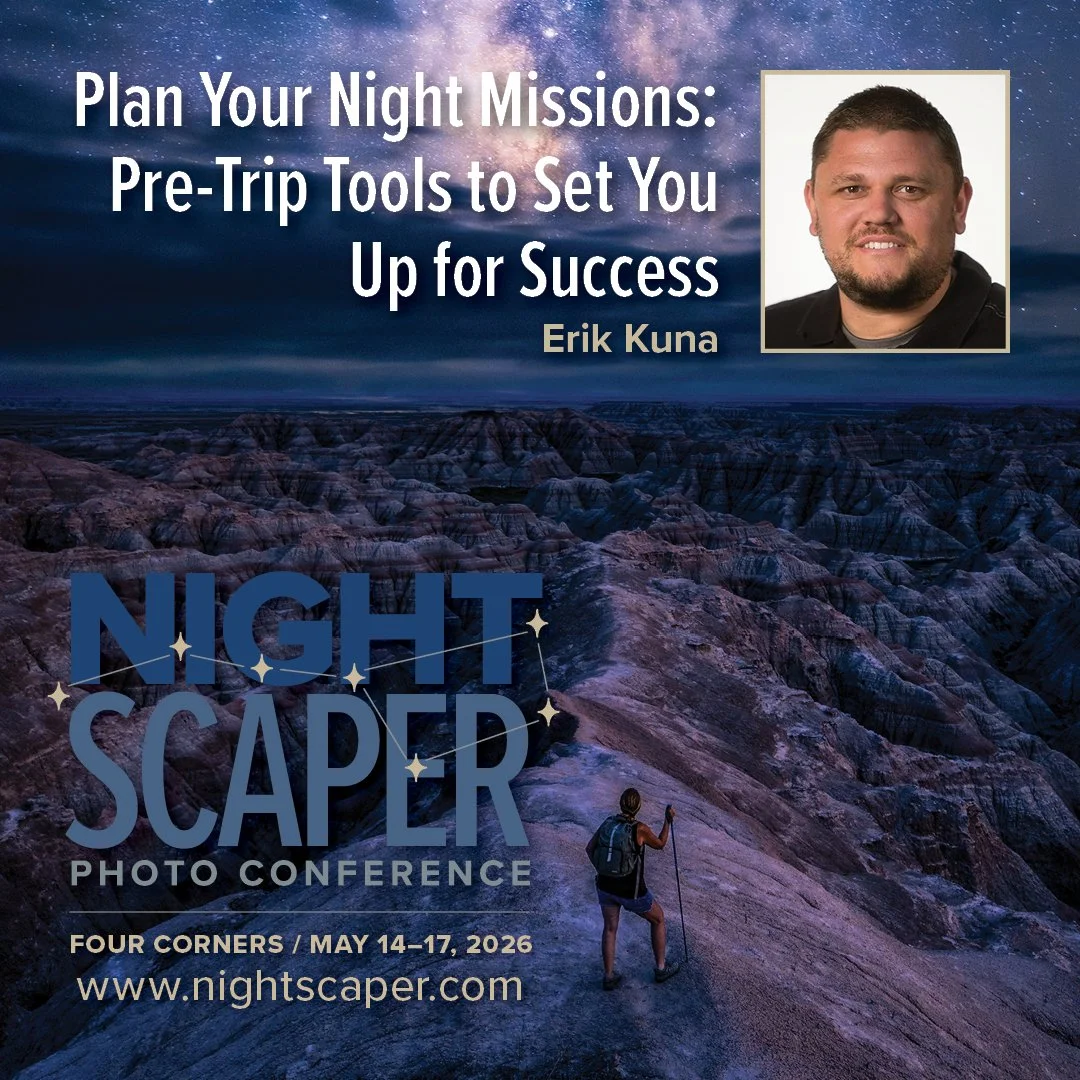
Erik Kuna
Plan Your Night Missions: Pre-Trip Tools to Set You Up for Success
So much of a great night photo happens before the shutter ever clicks. This presentation will take attendees behind the scenes of how Erik Kuna plans his trips using tools such as Google Earth for terrain scouting, PlanIt Pro and PhotoPills for celestial alignment, weather apps and almanacs to time the conditions, and even some overlooked resources like local light pollution overlays and terrain shadow studies.He’ll show you how to go from “Where do I shoot?” to “Here’s exactly where to stand and when to stand there.” It’s tactical and nerdy in the best way, but accessible for every level.
-
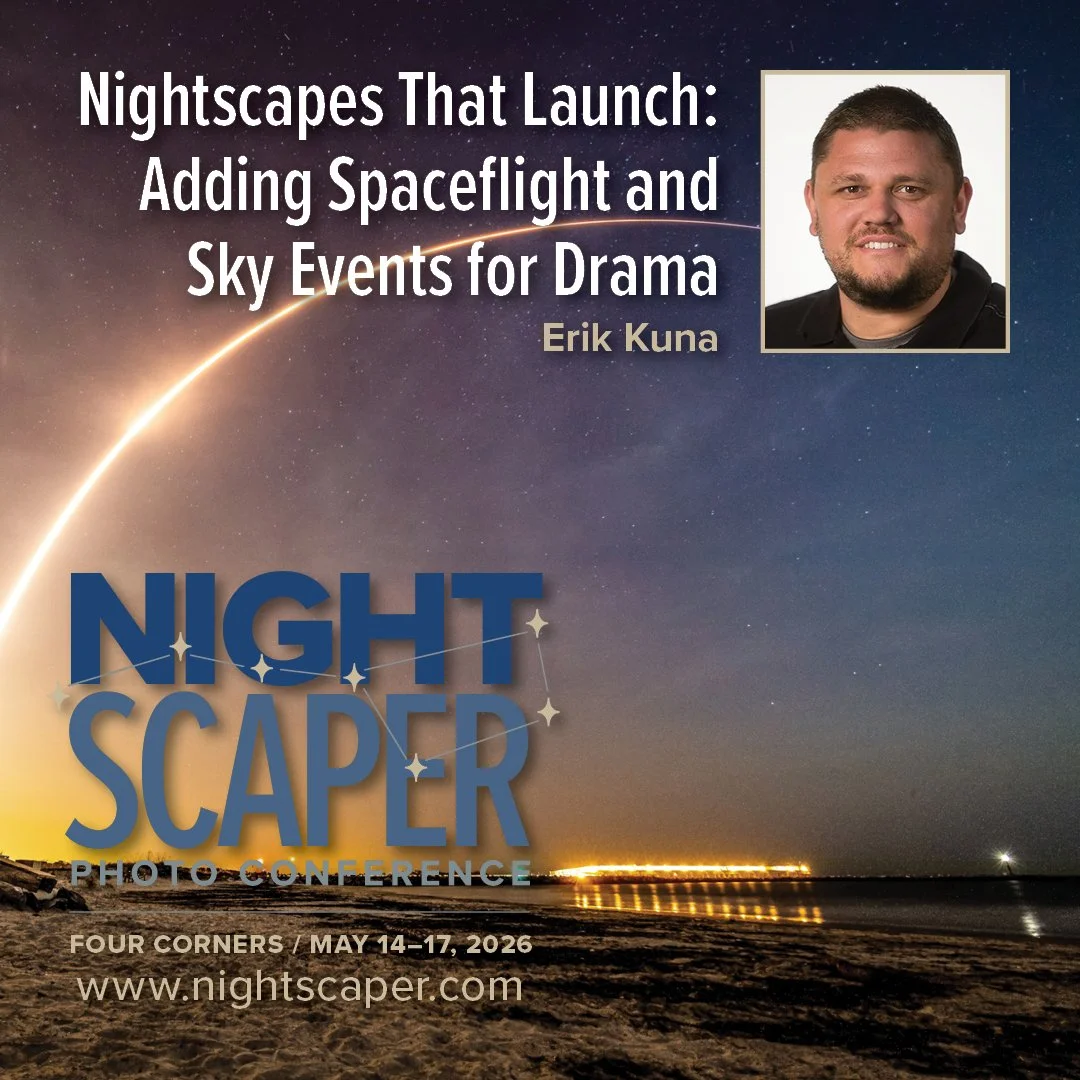
Erik Kuna
Nightscapes That Launch: Adding Spaceflight & Sky Events for Drama
This one brings it all together: How to elevate your astro images by timing and capturing rockets, satellites, ISS passes, eclipses, meteor showers and even reentries.Erik Kuna will walk you through how he has built images that combine long-exposure astro work with real-time space events, from tracking Falcon 9 launches to planning ISS transits over iconic foregrounds. He’ll share gear setups, timing tools and composition tricks, as well as how to turn these fleeting moments into jaw-dropping storytelling images.
It’s astro meets aerospace—and it’s a great way to stand out in the night photography scene.
-
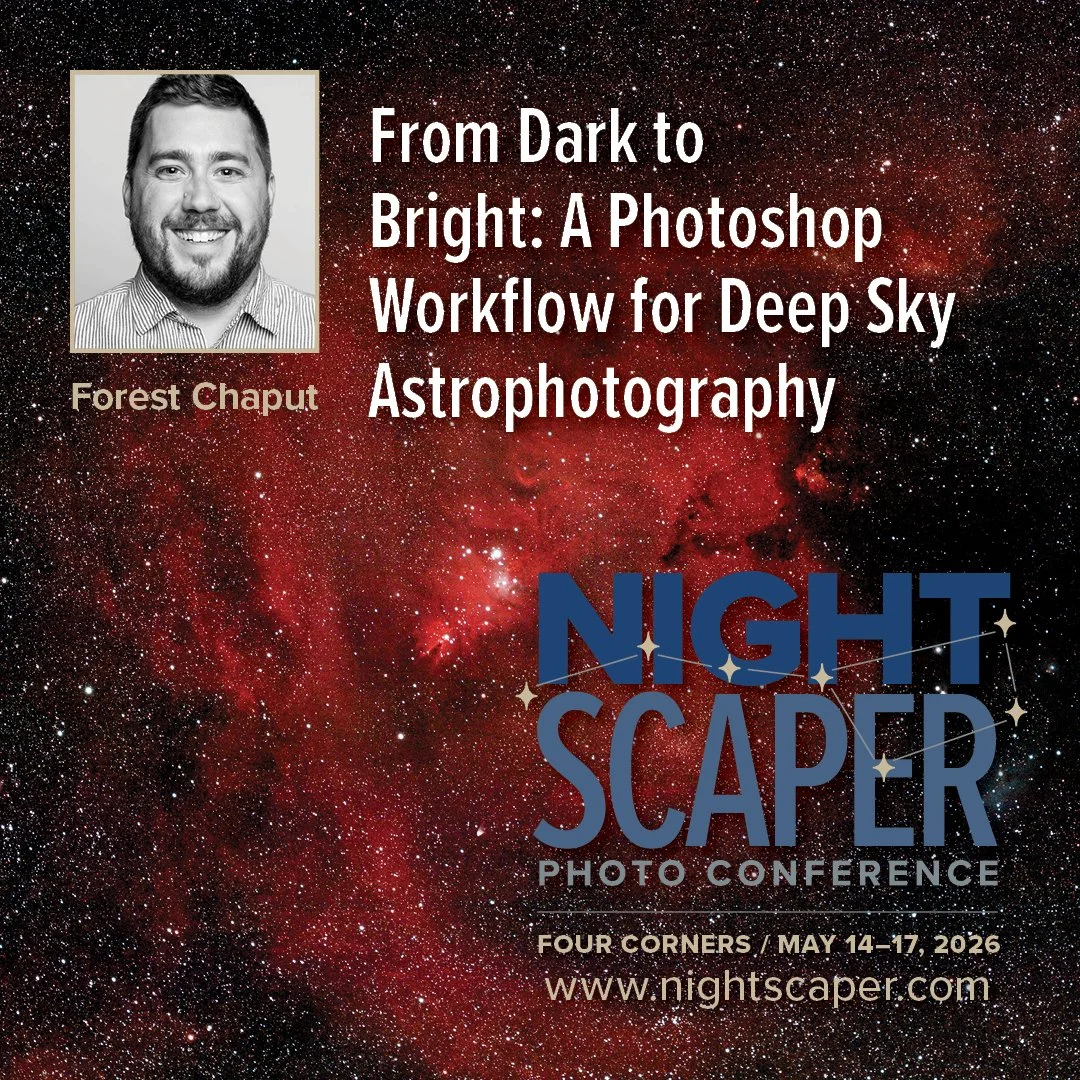
Forest Chaput de Saintonge
From Dark to Bright: A Photoshop Workflow for Deep Sky Astrophotography
Turning a dark linear file into a vibrant deep sky image is one of the most rewarding parts of astrophotography. If your tool of choice is Photoshop, this class will provide you with a structured approach to editing.Forest Chaput de Saintonge will walk through the specific challenges of deep sky editing, such as:
• the stretch: how to iterate with curves and levels to reveal data without blowing out the highlights
• color balance: aligning the histogram to get natural background colors
• star management: techniques to keep your stars tight so they don’t overpower the nebula or galaxy
• finishing touches: using selective adjustments to polish the final image -
Forest Chaput de Saintonge
Assembling a Beginner Portable Deep Sky Astrophotography Kit
You don’t need a permanent observatory or a massive telescope to capture great images of galaxies and nebulae. In fact, some of the most fun you can have with astrophotography requires only a rig that fits in a backpack.In this presentation, Forest Chaput de Saintonge will offer a guide to assembling a portable astrophotography system that balances weight with performance. He will look at the essential components you need:
• mounts: comparing star trackers versus lightweight GoTo mounts
• optics: choosing between camera lenses and small refractors
• control: how to automate your imaging
• power: keeping things running with portable battery packsWhether you are looking to build your first rig or to downsize your current one for travel, Forest will help you feel comfortable with what works, what doesn’t, and how to put it all together.
-
Gabriel Biderman
New to the Night: A Wonderer’s Guide to Dark-Sky Photography
More than just a 101 class, this session will inspire and give you comfort with going out to photograph at night. Consider this a foundation course on gaining valuable insight into capturing star points, the Milky Way, star trails, light painting and more.Night photographer Gabriel Biderman will share best practices for each of these topics, and he’ll offer tips on gear selection and planning on how best to seize the night so that you come home with a variety of images from an evening under the stars.
Sponsored by B&H Photo
-
Ian Lauer
The Fast Track to Deep Space Photography: How to Easily Capture Your First Deep Space Image in One Night
Ever dreamed of photographing galaxies and nebulae, but felt overwhelmed by the gear, the setting or where to even begin? In this practical, step-by-step session, astrophotographer Ian Lauer will strip away the complexity and give you a clear, beginner-friendly roadmap to capturing your very first deep space image.No dense jargon. No intimidating theory. Just a walkthrough of everything you need to know: what gear works best, how to set it up, what to shoot, and how to get a real image of deep space on your first try.
This talk is your invitation to start your own journey into deep space astrophotography, without the steep learning curve.
-
Ian Lauer
YouTube Secrets: Building a YouTube Channel Around the Night Sky
Want to start a YouTube channel around space and astrophotography, but not sure where to begin? In this talk, Ian Lauer will share how he grew his channel to 5 million views in less than one year.You’ll learn how to come up with great video ideas, how to read YouTube analytics without getting overwhelmed and how to make content that actually connects with people. Ian will break down what works and what doesn’t, from thumbnails and titles to pacing and personality, all in a way that’s easy to follow and focused on creators who love the night sky.
Ian will also talk about the bigger picture: how YouTube can lead to partnerships, projects and even income when you build your audience the right way. This is a practical, honest and motivating talk for anyone who loves space and wants to turn that passion into something bigger online.
-
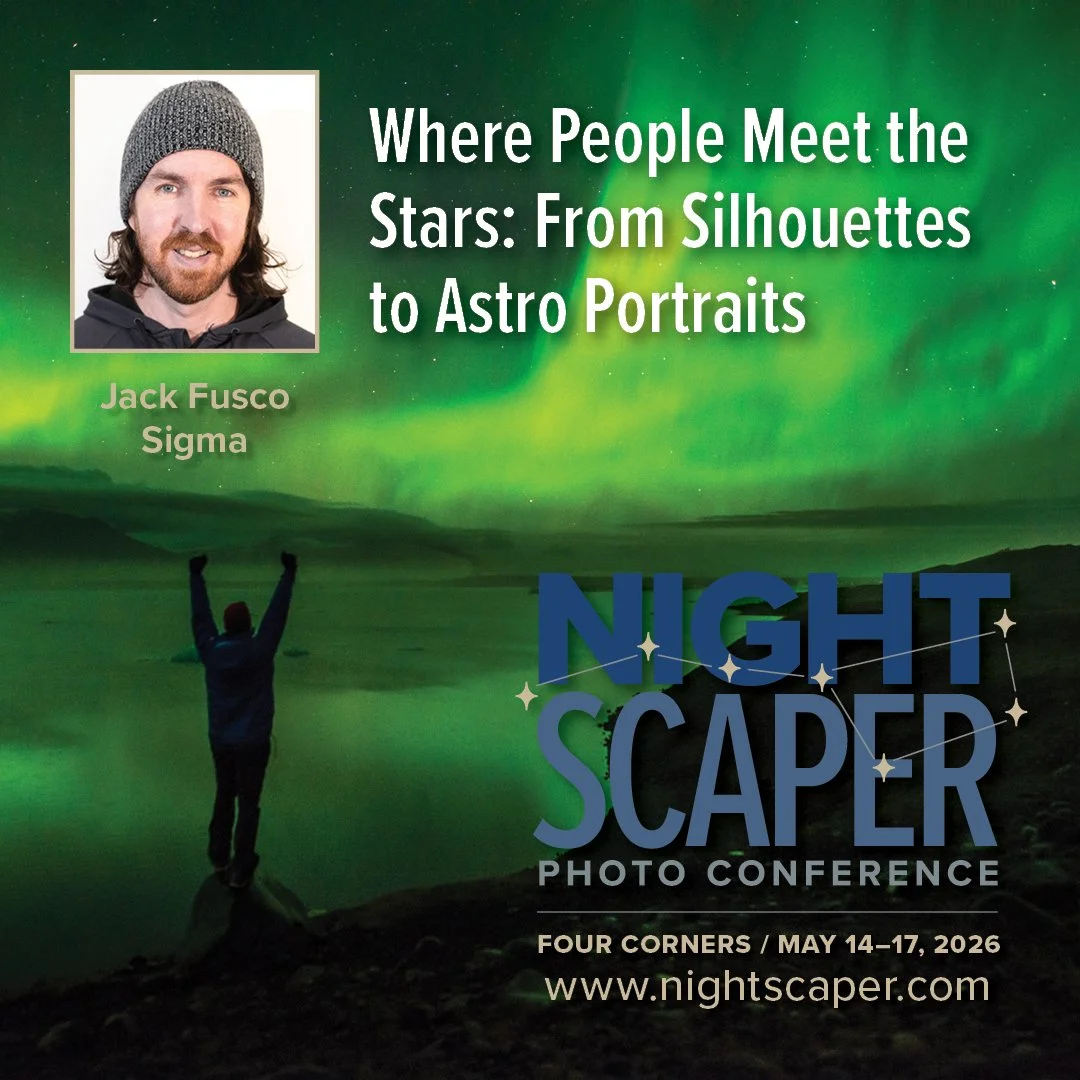
Jack Fusco
Where People Meet the Stars: From Silhouettes to Astro Portraits
Jack Fusco will explore the art of blending the celestial with the terrestrial by incorporating human subjects into astro-landscape photography.Whether silhouetted against the Milky Way’s shimmering core or illuminated by the soft glow of a crescent moon, human figures add a compelling and relatable dimension to night sky landscapes. This session will dive into practical techniques and artistic considerations for photographers looking to evoke emotion and scale in their night compositions through the inclusion of people.
Sponsored by Sigma
-
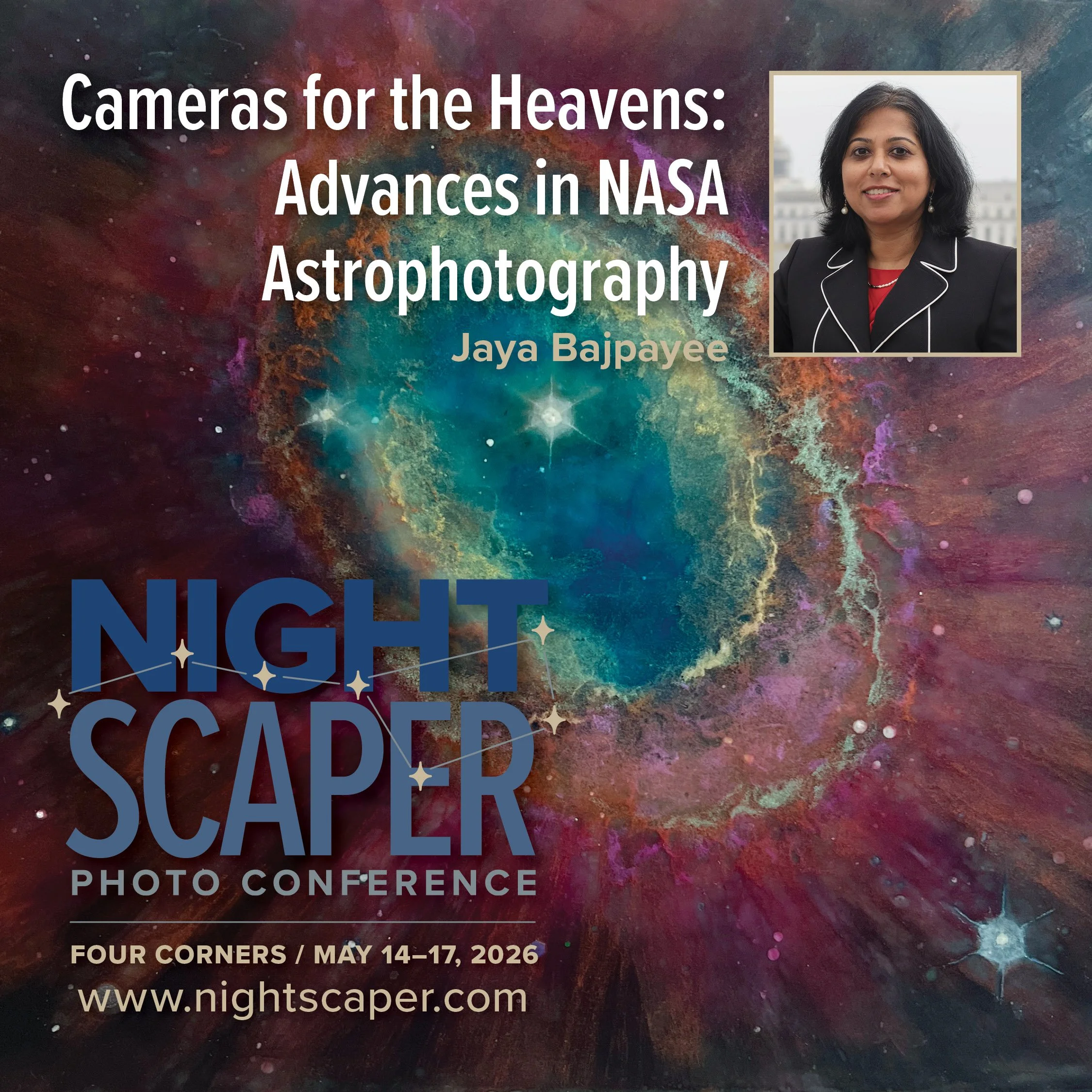
Jaya Bajpayee
Cameras for the Heavens: Advances in NASA Astrophotography
NASA’s astrophotography has evolved significantly over time.Early missions, such as the orbiting Astronomical Observatories and High Energy Astrophysics Observatories, paved the way for space-based astronomy. Launched in 1990, the Hubble Space Telescope revolutionized astronomy with its high-resolution imaging and spectroscopy capabilities. Launched in 2021, the James Webb Space Telescope observes in infrared, enabling studies of the early universe, of star and planetary formation, and of the atmospheres of exoplanets.
Since the inception of the Astrophysics Division at NASA, numerous instruments have been developed and launched, including telescopes, particle detectors, and spectrometers. These instruments enable scientists to study a wide range of celestial objects and phenomena, from the formation of galaxies to the search for exoplanets. Each new mission improves on previous missions by advancing measurement techniques, imaging sensors, telescopes and image processing techniques. This approach of continuous improvement has resulted in a deeper understanding of the universe’s structure and evolution, composition, exoplanet atmospheres and habitability.
In this talk, NASA’a Jaya Bajpayee will discuss improvements in the agency’s astrophotography from the earliest missions to future missions, such as Roman Space Telescope and Habitable Worlds Observatory. -
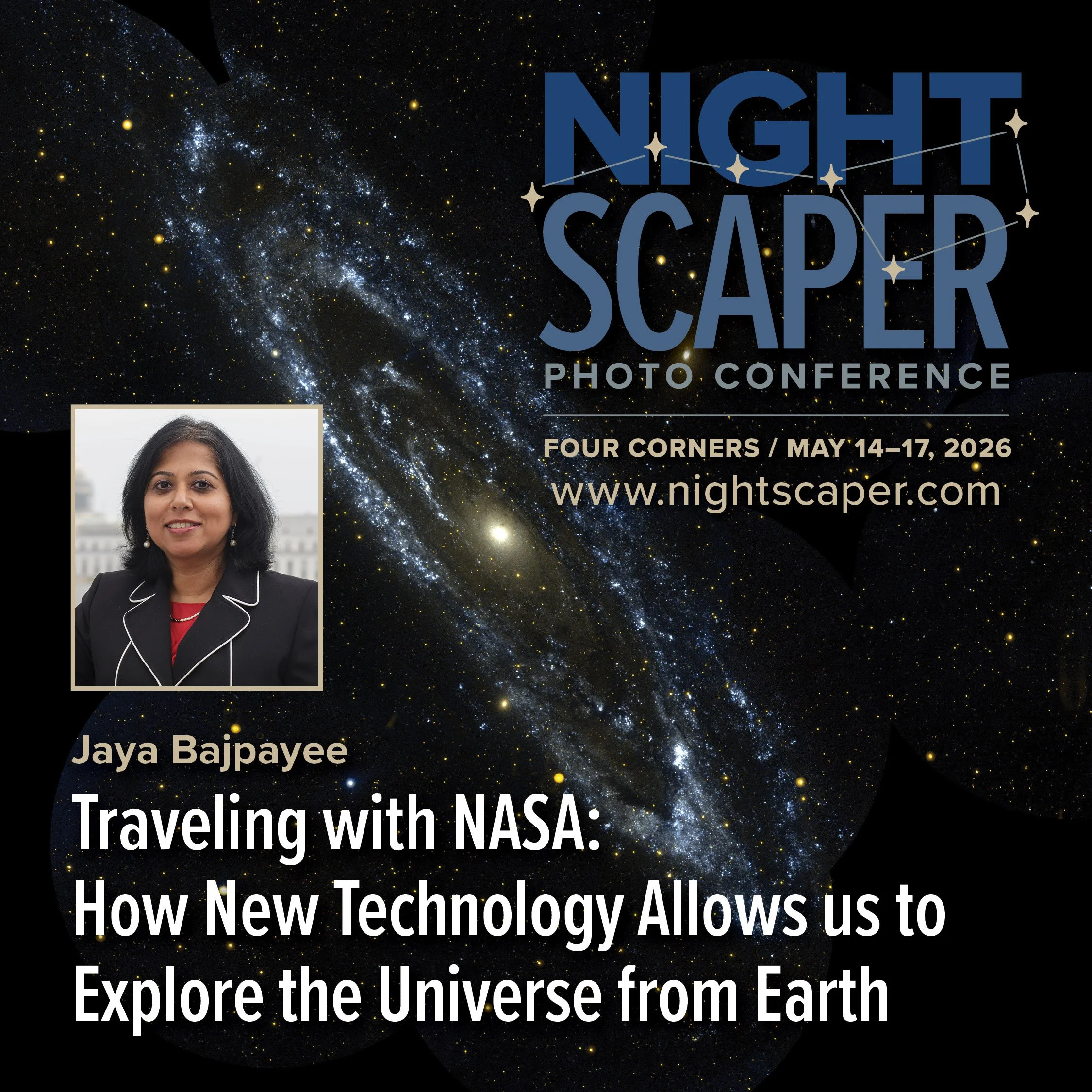
Jaya Bajpayee
Traveling with NASA: How New Technology Allows Us to Explore the Universe from Earth
Exploration is different in the 21st Century. Images are at the forefront. Cameras are what explore the last frontier.NASA science discoveries are made primarily by space-based satellites, probes, rovers, and helicopters carrying telescopes and instruments that record images at various wavelengths across the electromagnetic spectrum. Scientists gain new insights about our home planet, the solar system and the cosmos at large by correlating data from diverse sources.
Some notable results include climate models for Earth and Mars, weather predictions, following the water on Mars to detect possibility of past life, surveying for landing sites for human exploration on the moon and Mars, studying atmospheres of other planets (including those around other star systems), researching the age of the universe, and detecting dark matter—to name just a few examples.
In this special presentation, Jaya Bajpayee of will detail how a number of recent key discoveries were made by diverse imaging techniques. She will also discuss imaging techniques under consideration to enable NASA’s future plans to explore planets in the solar system, to detect habitable worlds around other star systems and even to monitor our home planet.
-
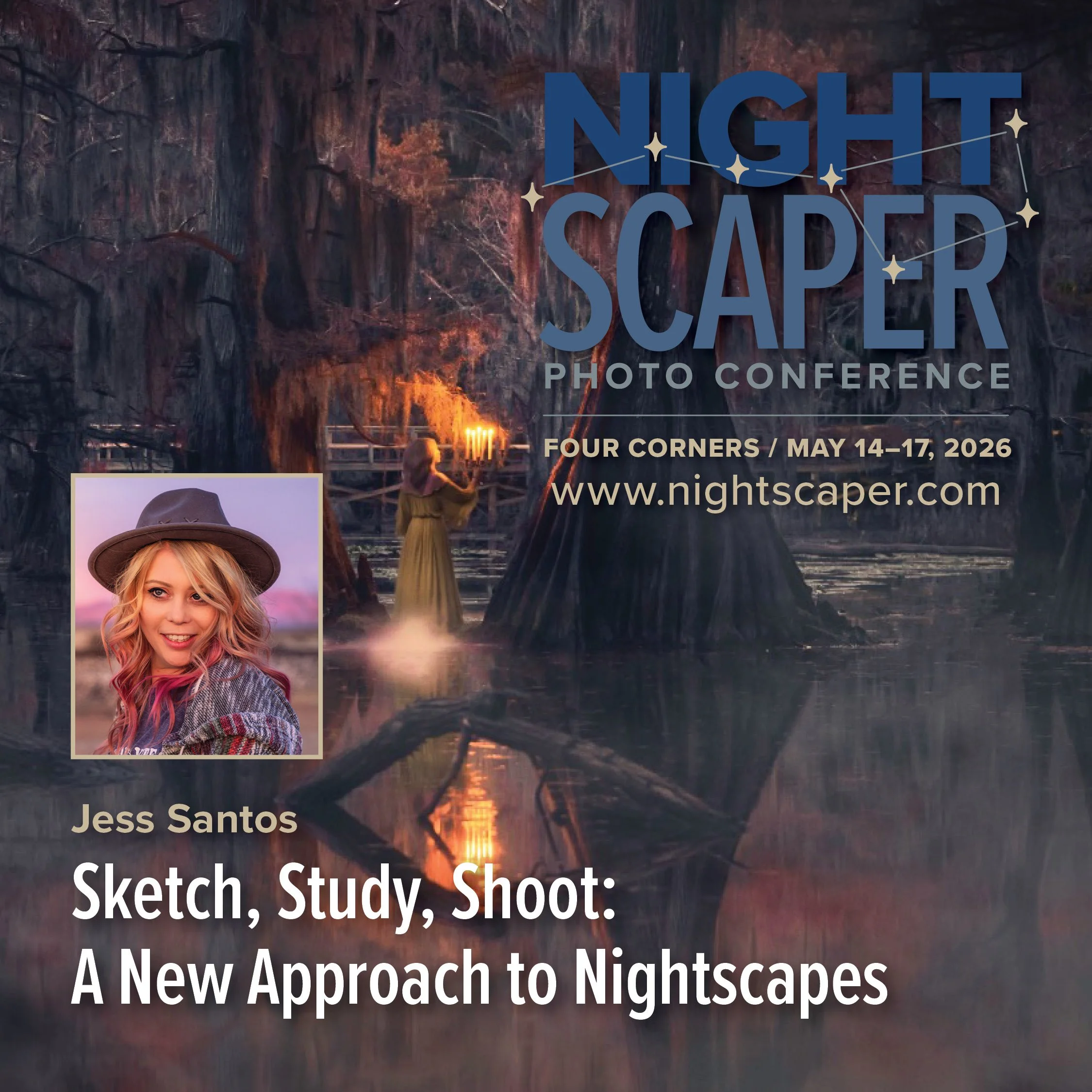
Jess Santos
Sketch, Study, Shoot: A New Approach to Nightscapes
Have you ever headed out to shoot and felt like something’s missing even when the scene is stunning? That “something” is often intention.In this talk, Jess Santos will explore how the real magic in nightscape photography begins long before you press the shutter. From concept development and location research to sketching, mood boards and studying light, Jess will share how preparation can elevate your images from pretty to powerful. Drawing inspiration from painters such as Monet and photographers such as Ansel Adams, she’ll look at how artists across many mediums use study and planning to create meaningful work.
You’ll walk away with practical tools to help you craft images that connect, communicate and resonate, because when you know what you’re looking for, it’s so much easier to find it. Whether you’re a planner or an in the moment shooter, there’s something here to help you slow down and shoot with purpose.
Sponsored by Shimoda
-
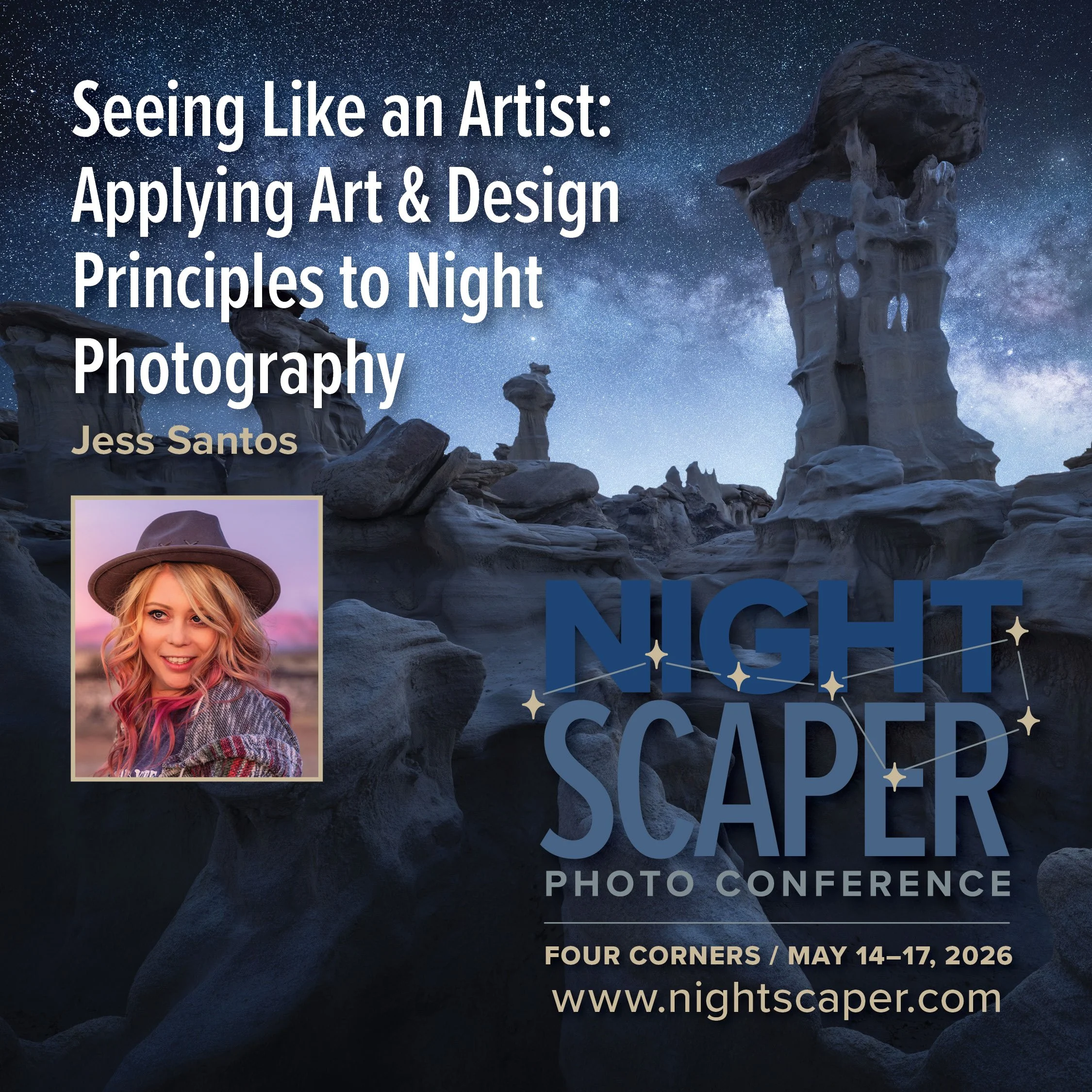
Jess Santos
Seeing Like an Artist: Applying Art & Design Principles to Night Photography
What if you could approach your night photography the way a painter approaches a blank canvas? In this talk, Jess Santos will explore how classic principles of art and design—such as balance, contrast, movement and emphasis—can transform the way you compose your night images.Whether you’re shooting the Milky Way over desert dunes or light painting among canyon walls, these time-tested ideas can help you make more intentional, compelling photographs. Jess will break down each principle with real-world examples and show you how to use them in the field and in your edits.
This isn’t about strict rules, but rather about seeing creatively, using the visual language artists have relied on for centuries. If you’ve ever felt like your night shots were missing something, this talk might just be the spark of inspiration you’ve been looking for.
-
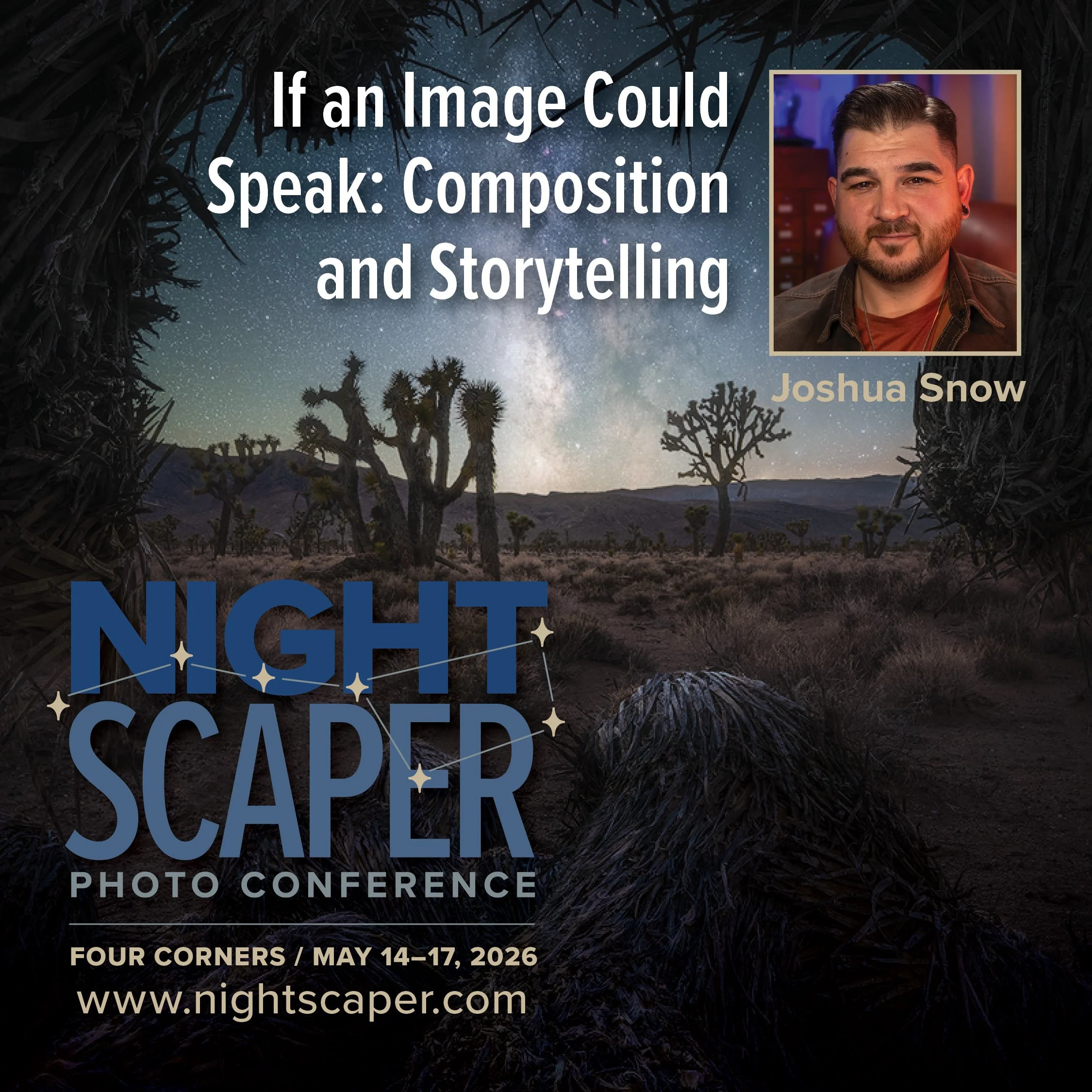
Joshua Snow
If an Image Could Speak: Composition and Storytelling
This talk touches on key elements of creating dynamic and interesting compositions, as well as methods of conveying a story through composition.When Joshua Snow composes and captures an image, he wants the viewer to take it in with all of their senses, not just sight. How does one do that? Composition and oftentimes composition is the biggest challenge for photographers. Joshua will offer fun ways to help you conveying what it is you want the viewer to see—what to include, what not to include, and how to use light and atmosphere and elements within the landscape to support your subject and to strengthen the composition.
-
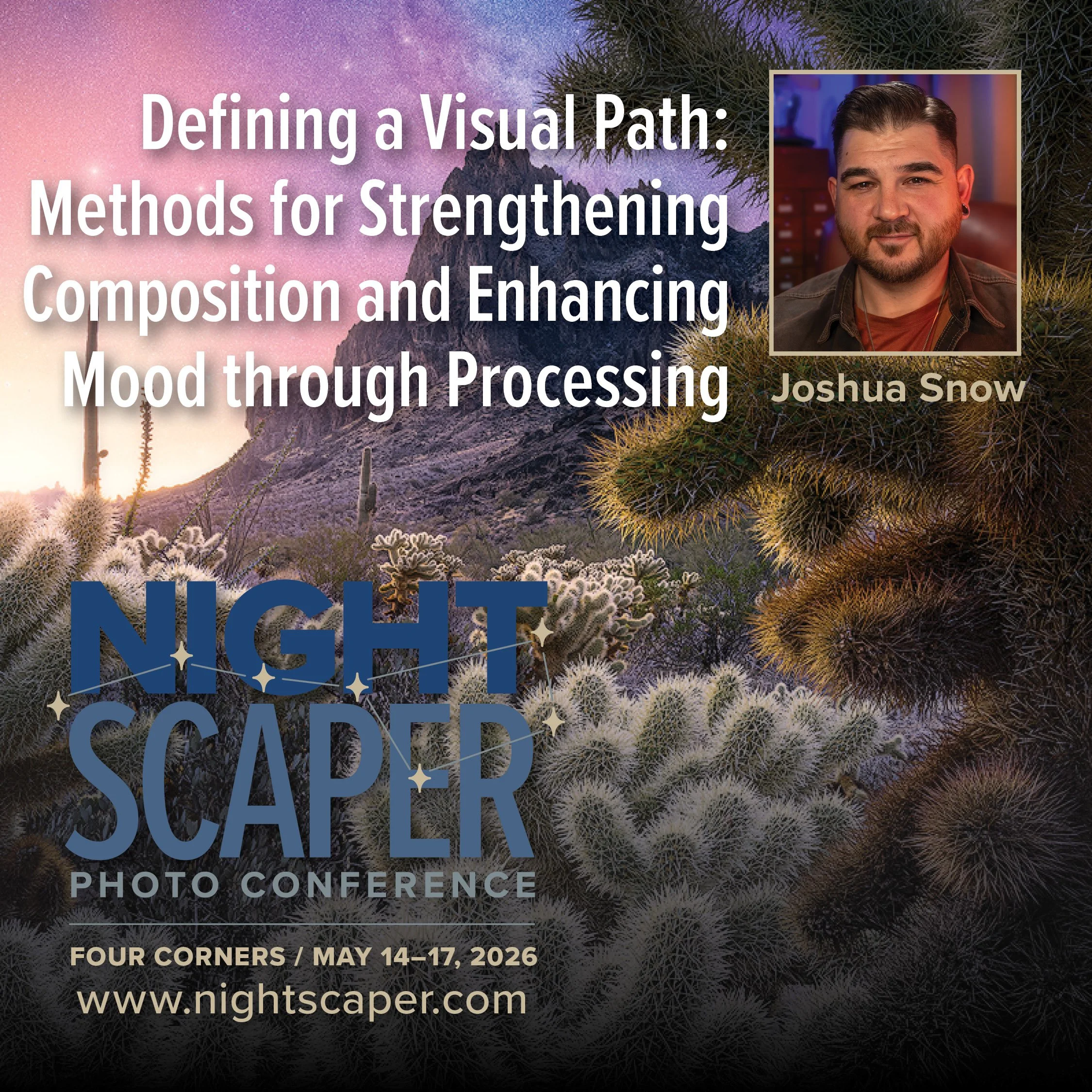
Joshua Snow
Defining a Visual Path: Methods for Strengthening Composition and Enhancing Mood through Processing
In this presentation Joshua Snow will touch on artistic processing methods to help enhance or strengthen a composition or to convey a certain mood or look in your imagery. Building off of the previous talk “If an Image Could Speak,” Joshua will discuss how to use color, light and contrast to enhance and strengthen composition and to create a visual flow for your viewer’s eye to follow.Over the course of 13 years Joshua has used these concepts to help shape his own work and to create his own personal style. Processing is an art, but only if you’re thinking your way through it!
-
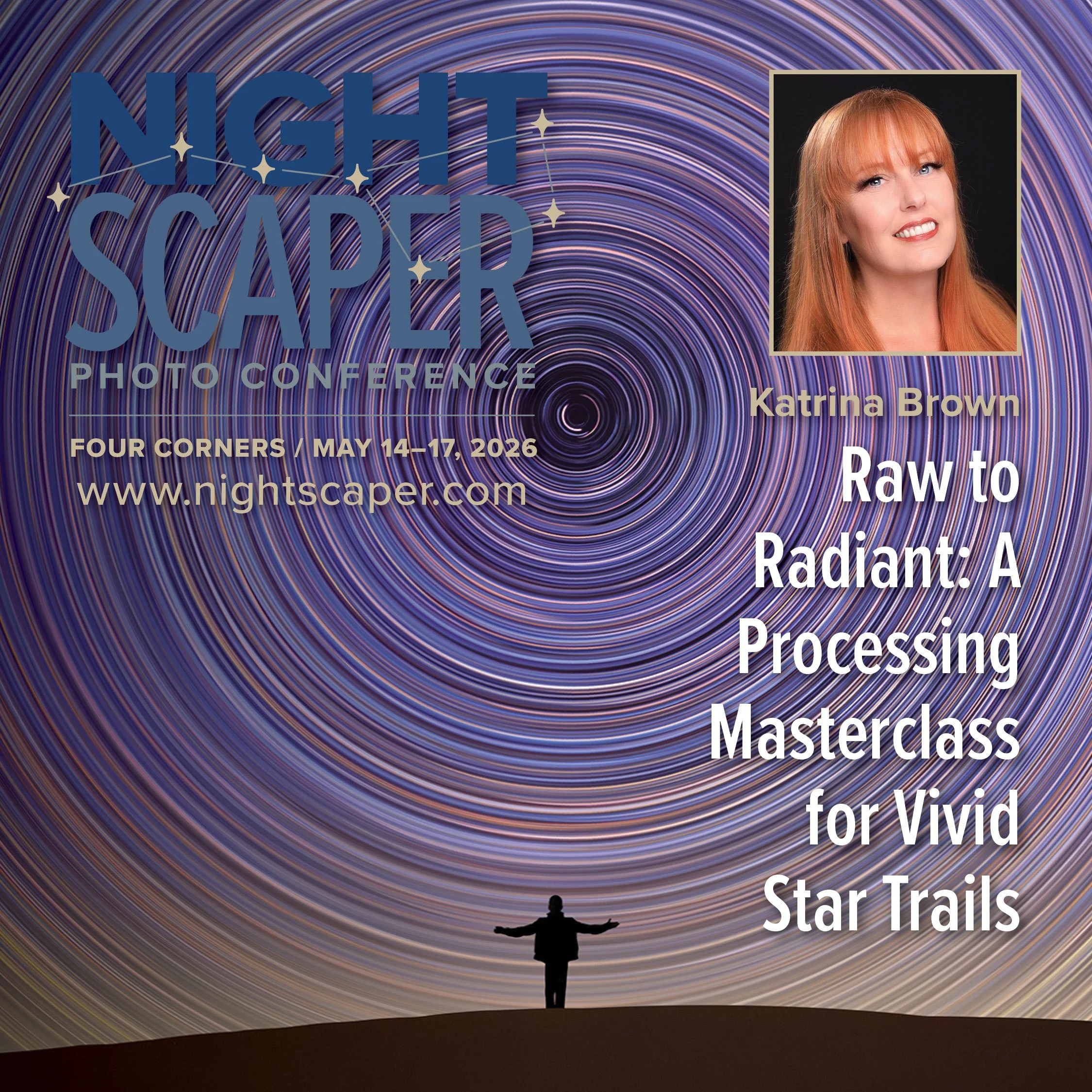
Katrina Brown
Raw to Radiant: A Post-Processing Masterclass for Vivid Star Trails
Unlock the full color potential hidden in your raw star-trail images. Join Katrina Brown for a hands-on walkthrough of a complete workflow—from capture to processing—designed to bring out the rich, vibrant colors of stars in your trail photographs.Learn how to dial in your camera settings for better color data, how to isolate and enhance tones in Lightroom or Camera Raw, how to stack for impact using StarStaX, and how to add final artistic touches in Photoshop.
-
Katrina Brown
Cinemagraphs of the Night Sky
Learn how to create hypnotic cinemagraphs that bring your star trails to life while keeping your landscape perfectly still.Using Lightroom, StarStaX and Photoshop, Katrina Brown will walk you through capturing the right sequence, blending trails, freezing your foreground and animating seamless loops. Perfect for reels, portfolios and adding a cinematic edge to your night sky work.
-
Ken Lee
How to Jump-Start Your Creativity in Night Photography
We all have hit creative walls in our night photography. However, there are easy, practical strategies that can blast past these walls and have you feeling creatively refreshed.In this presentation, night photographer and author Ken Lee will offer strategies for changing your approaches and mindset, adding light that stokes the imagination and engenders new narratives, using fun techniques to stretch your compositional boundaries, and more. After all, night photography offers infinite possibilities, and this presentation will help you to explore more of them.
-
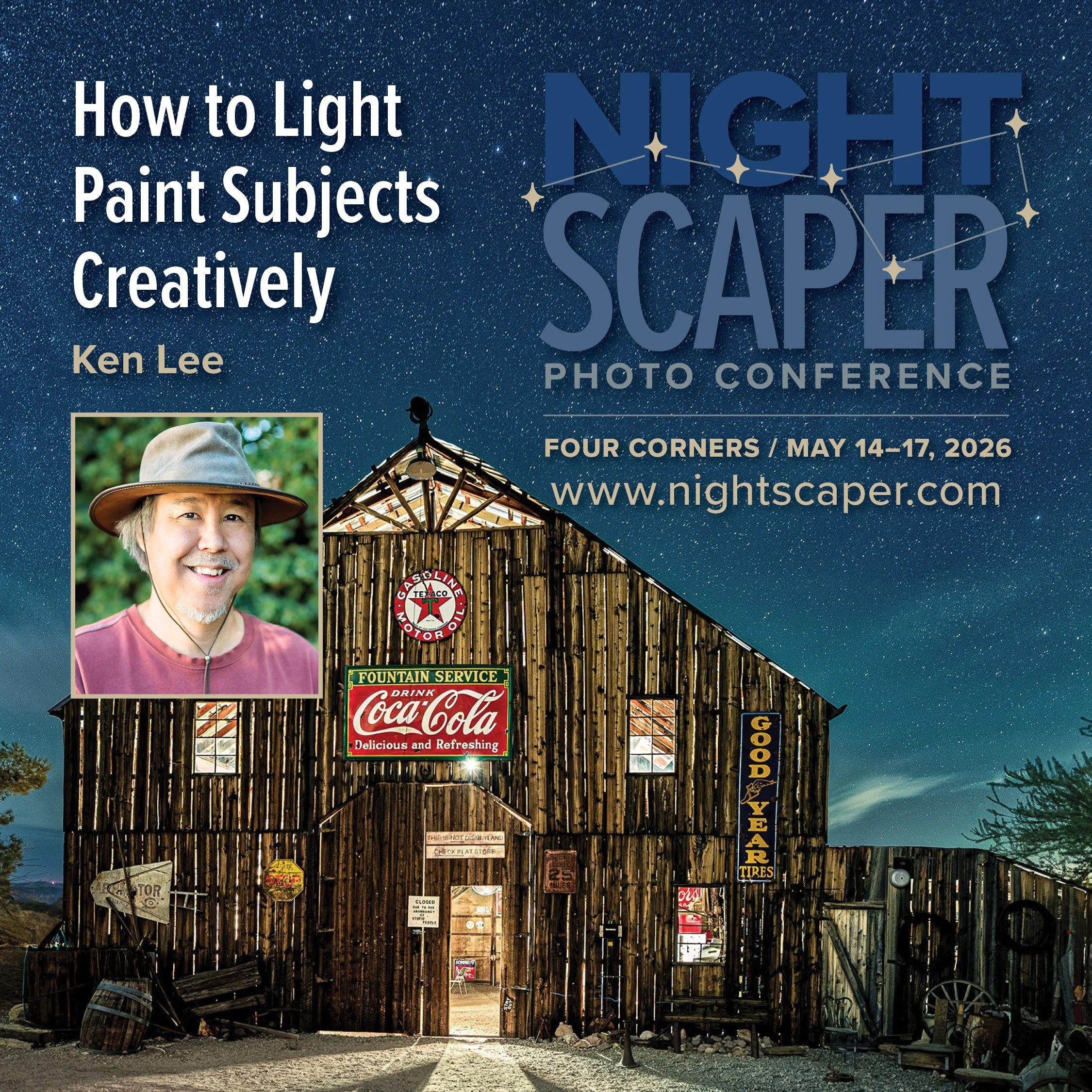
Ken Lee
How to Light Paint Subjects Creatively
Are you interested in doing handheld light painting creatively, going beyond simply illuminating the foreground subject? The angles of light you choose profoundly affect how your subject appears in a photograph, and how you create texture, depth, dimensional quality, shadow and drama.Much like a film director, you can choose what to highlight and what to keep in shadow while using a handheld light source during a long exposure of up to several minutes. Night photographer and author Ken Lee will use specific examples to show creative uses of light. He’ll break this down in a fun, easy-to-understand manner so you can begin crafting unique night photography images with a handheld light source.
-
Lance Keimig
The Best, But Not Necessarily the Brightest: Low-Level Lighting Round-Up
The techniques for using supplemental lighting in night photography have evolved along with the technology, and advances in LED lighting have brought us a plethora of highly adaptable lighting tools to work with.In this presentation Lance Keimig will discuss how different tools are suited to different techniques, and he will share some hacks to work around the limitations of your gear. He’ll present his research into the best options available today, and the advantages and disadvantages of different tools at different price points so you can choose the best lights for your night photography.
-
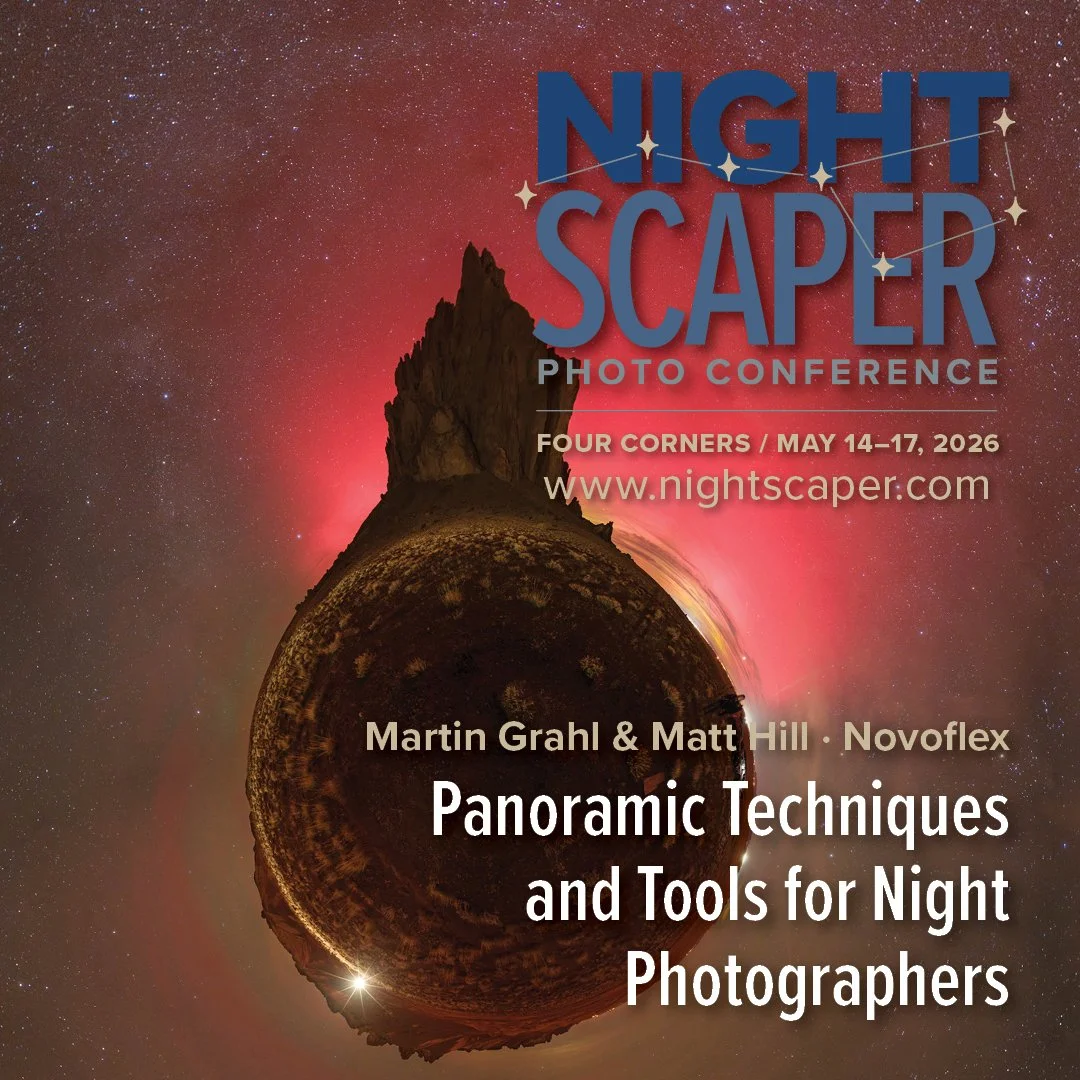
Martin Grahl & Matt Hill
Panoramic Techniques and Tools for Night Photographers
Have you wondered how to make successful panoramas at night? Join night photographer and pano expert Matt Hill and Novoflex’s Martin Grahl as they provide insights on the proper gear and techniques for making accurate night (or day) panoramas.
Experience a live demo on how to make both single- and multi-row panos—captured and edited during the presentation!
Sponsored by Novoflex
-
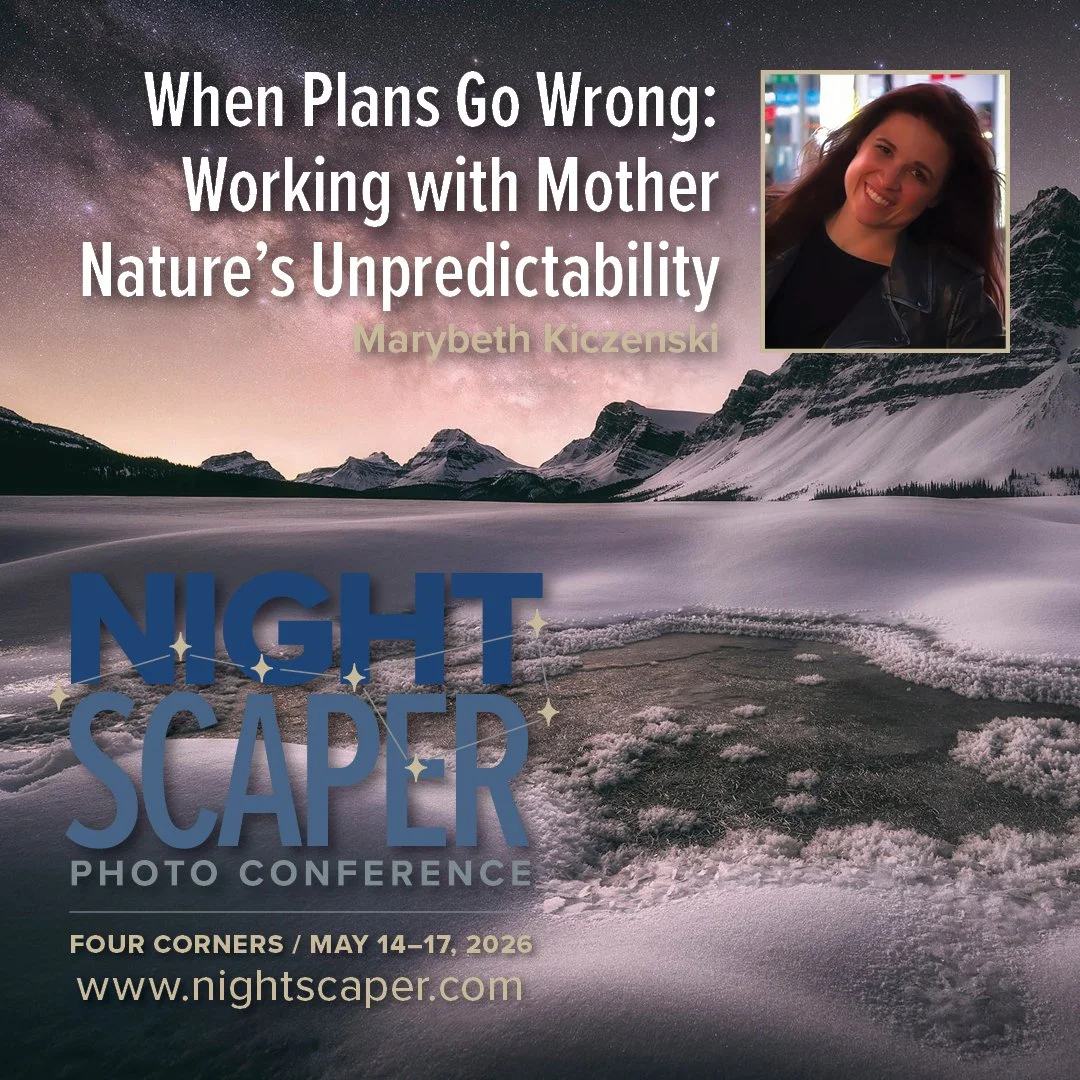
Marybeth Kiczenski
When Plans Go Wrong: Working with Mother Nature’s Unpredictability
What do you do when your master plan completely falls apart? Cry? Scream at the heaven above? Give up? Maybe all of the above?
Or … take these lemon moments and squeeze them into lemonade. As a photographer who has been adventuring around for a number of years, Marybeth Kiczenski can attest to many trips, trials and tribulations. Sometimes the best laid plans just fall apart.
What Marybeth has learned is that these moments give you opportunities. They force you out of your comfort zone, and sometimes can surprise you in ways you never imagined. They also give you a sense of gratitude for those times when everything does go smoothly.
This talk will be a little bit story time in addition to lessons on how to pivot and not let your emotions take control.
-
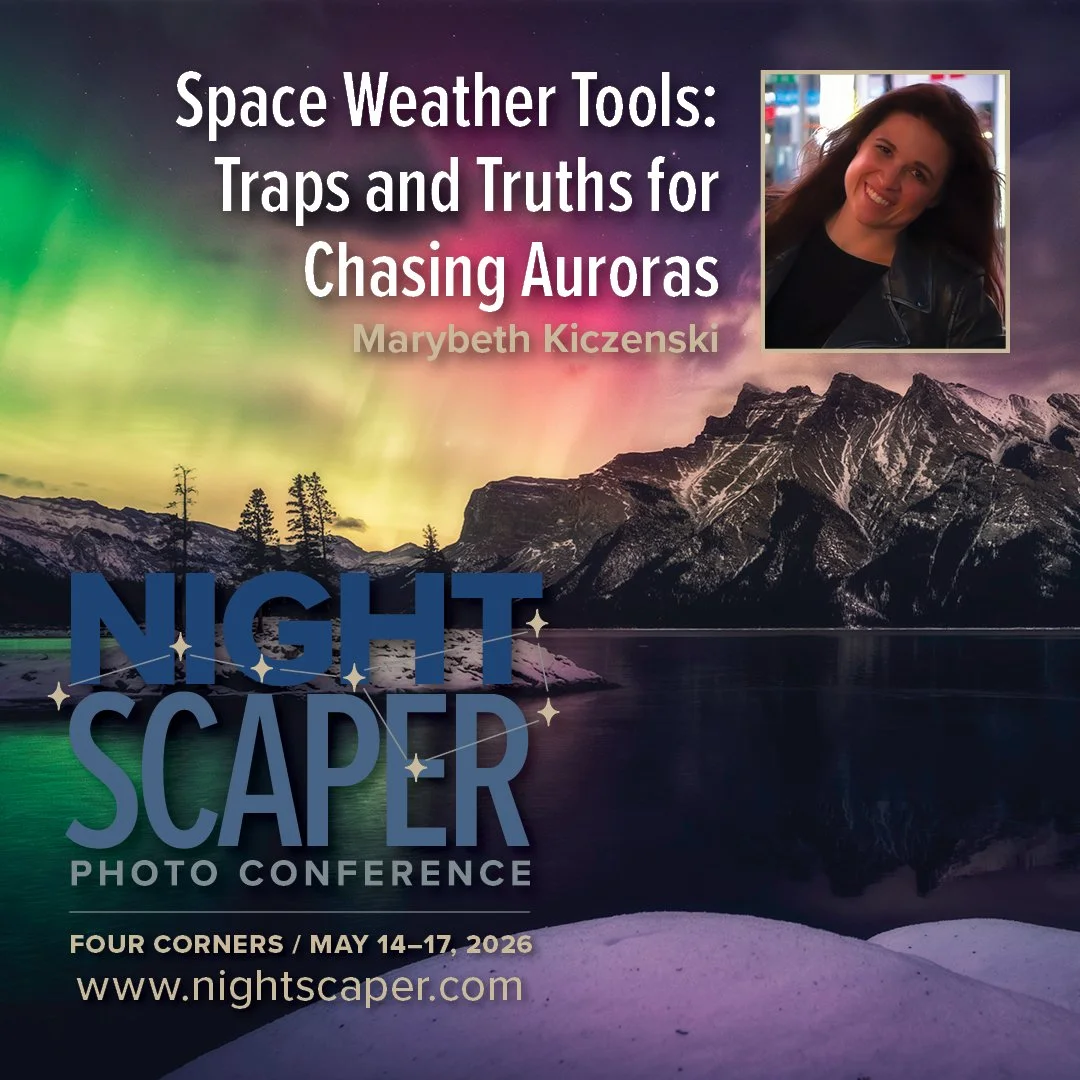
Marybeth Kiczenski
Space Weather Tools: Traps and Truths for Chasing Auroras
We live in the golden age of information. Photographers have access to more space weather data than ever before, from magnetometers to real time solar wind data to what seems like hundreds of apps. Despite all this information, the northern lights still have a habit of appearing when the forecast says “unlikely” and disappearing when Kp 6 is trending on social media. Why?
Marybeth Kiczenski will explore the space weather tools most commonly used by aurora chasers and photographers, and the ways that these tools are often misunderstood in the heat of the chase. She will detail how sometimes seemingly “good” data leads to nothing due to Earth’s magnetosphere adding its own chaotic personality to the mix. Along the way shee’ll discuss how to interpret real-time data and what is useful at different latitudes.
The goal: fewer broken expectations, better-informed chases, and maybe a little less yelling at aurora apps. -
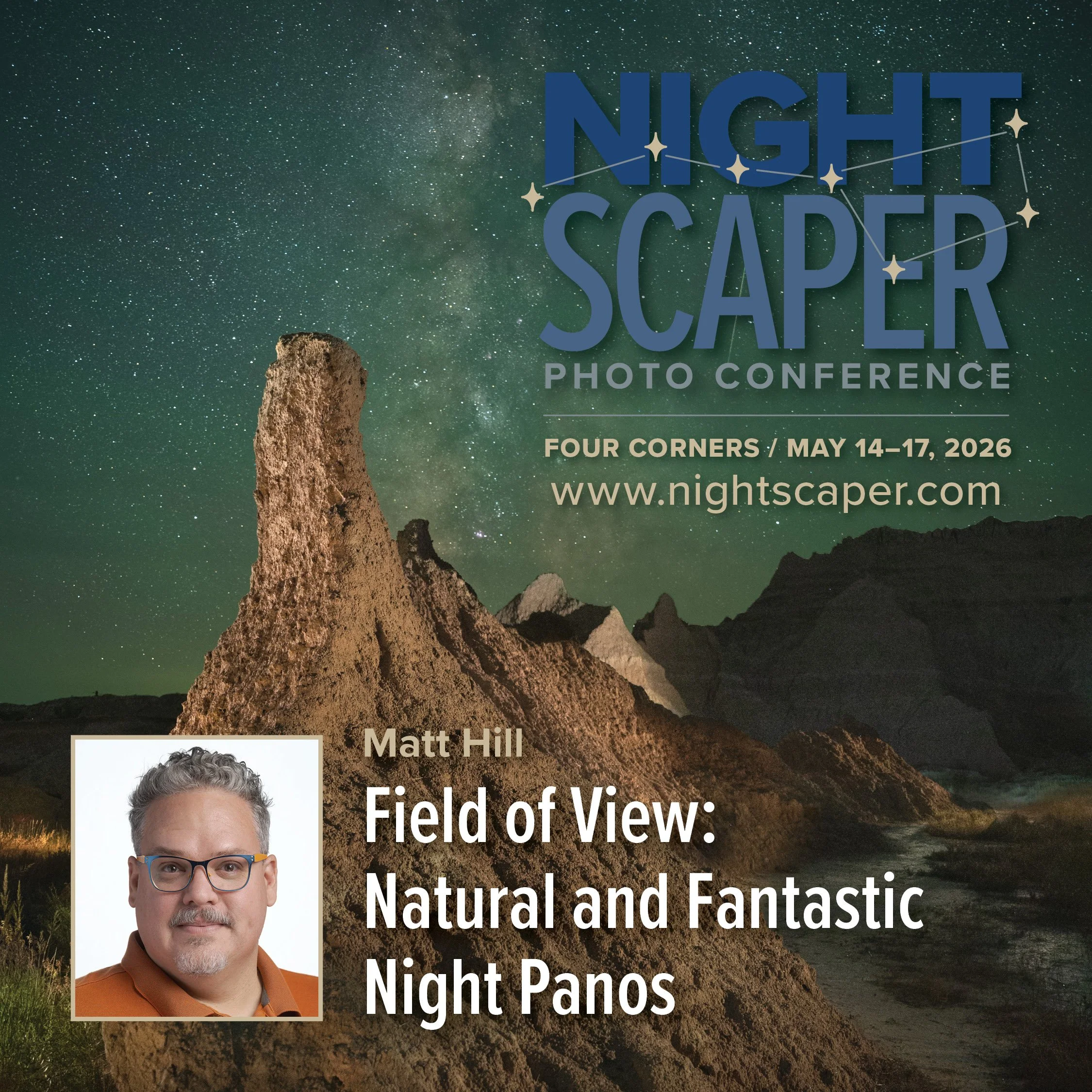
Matt Hill
Field of View: Natural and Fantastic Night Panos
Photography is a series of compromises, but your vision of a scene doesn’t have to be one of them. In this presentation, Matt Hill will share how he developed panoramic techniques to create natural compositions including any field of view. And sometimes, how exaggerating this can create wildly fantastic results, too. Learn how to choose a field of view and render it faithfully. -
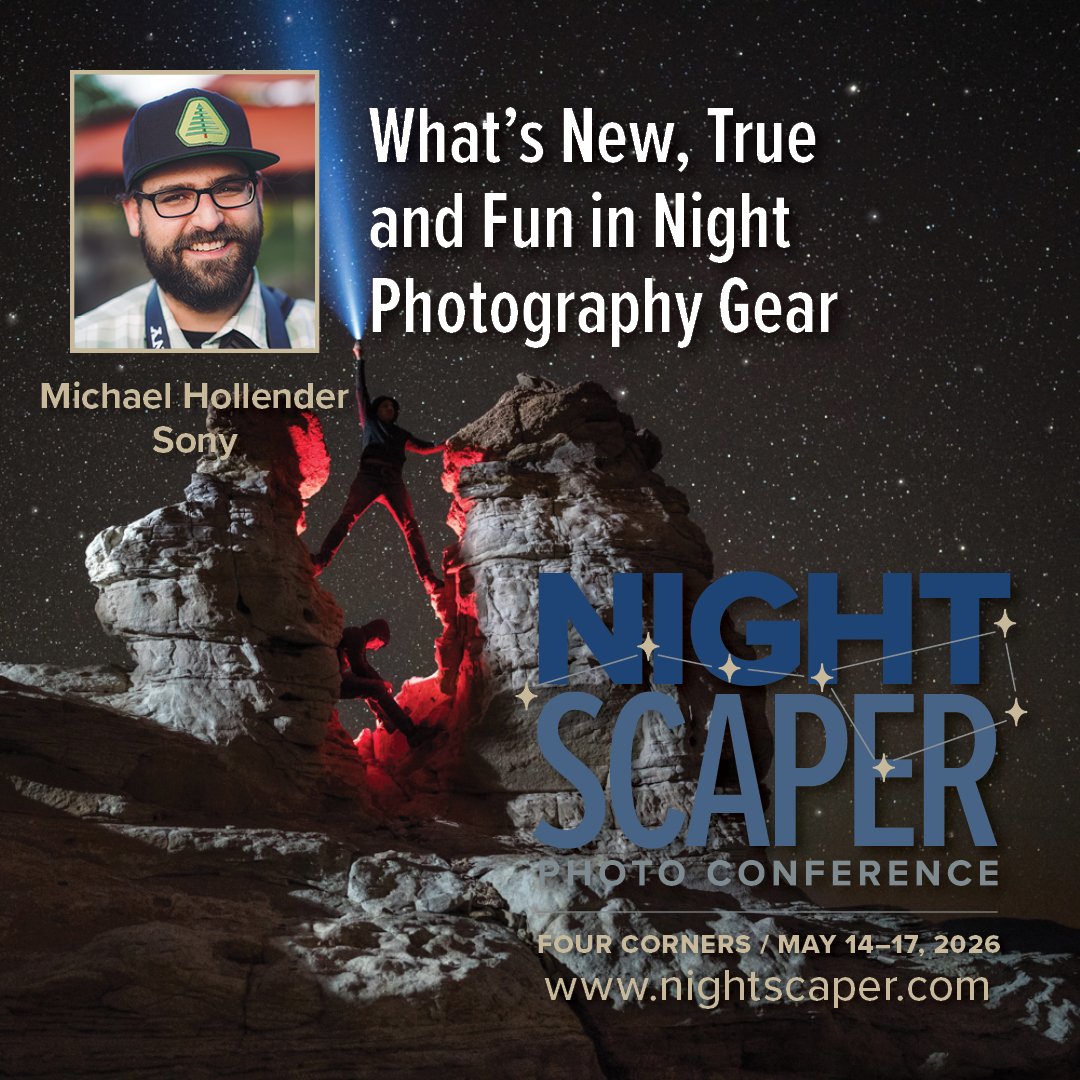
Michael Hollender
What’s New, True and Fun in Night Photography Gear
The world keeps moving faster and faster, including the evolution of camera gear and what it can do at night. What wasn’t possible even 10 years ago has become commonplace today, and the challenges of yesterday are already being solved today. To get you up to speed, Michael Hollender will cover the latest technology advances in mirrorless cameras and lenses as well as essential tools that keep you powered up and clicking long through the night.
Michael will share the evolution of the contents of his camera bag and the must-have items for night photography. He will also share many of the new, trending and creative additions that have made his night life more productive in the field—from tripod considerations to filters that can help bring out the glow in your stars or help lessen the light pollution in your images.
This session will help you check off those must-pack items to help ensure you are not left fumbling around in the dark.
Sponsored by Sony
-
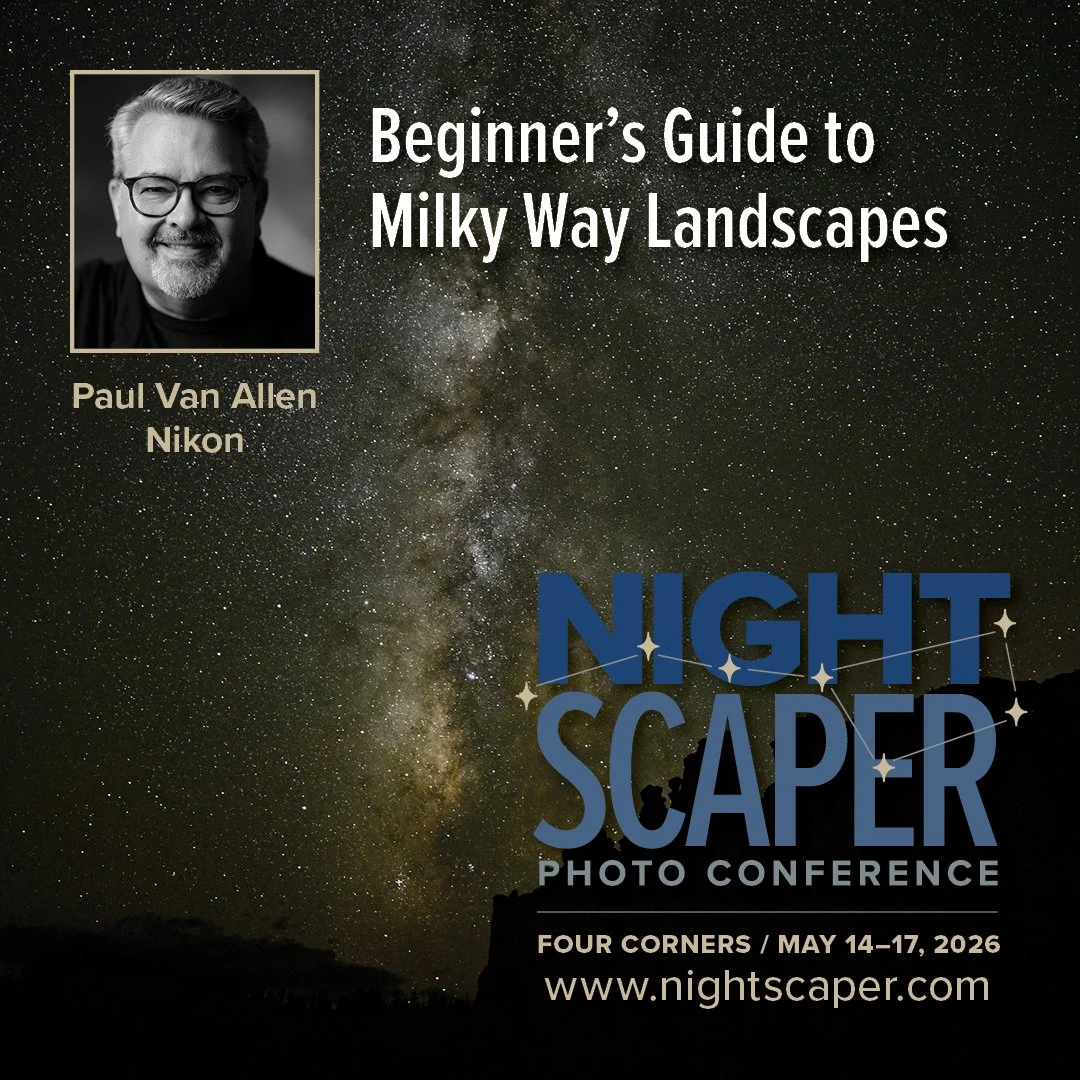
Paul Van Allen
Beginner's Guide to Milky Way Landscapes
Looking to get started? A bit overwhelmed at all the different options for making amazing images of the Milky Way? We got you! This quick start guide by Paul Van Allen will cover everything you need to know to go out and make images … now! He will cover menu settings. focus and exposure for single-image captures, getting you ready to head out into the night and capture our galaxy in all its glory.Sponsored by Nikon
-
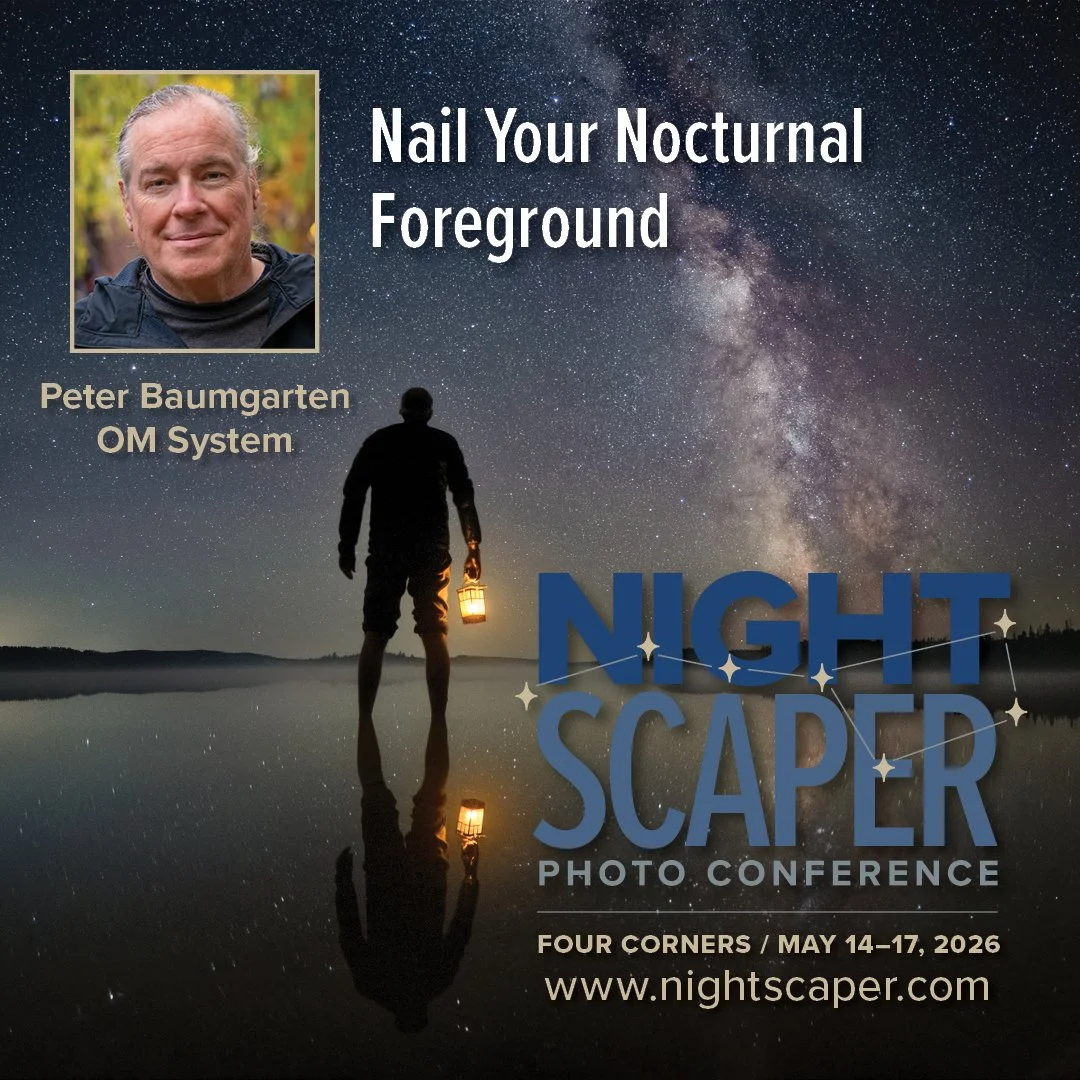
Peter Baumgarten
Nail Your Nocturnal Foreground
The night sky provides an incredible photographic backdrop for your astro-landscape images, but it is only that: a backdrop. The choices you make for the foreground are what will create photos that stand out.
Join Peter Baumgarten for an inspiring presentation focusing on fantastic foregrounds. He will dive into using props to enhance storytelling, crafting creative self-portraits, and making the most of lighting for texture, mood and atmosphere.
Peter will also show final examples that combine those foregrounds with Live Composite star trails, star points and more.
For both the beginner and the experienced photographer, this session is designed to spark new ideas that bring focus to the front.
-
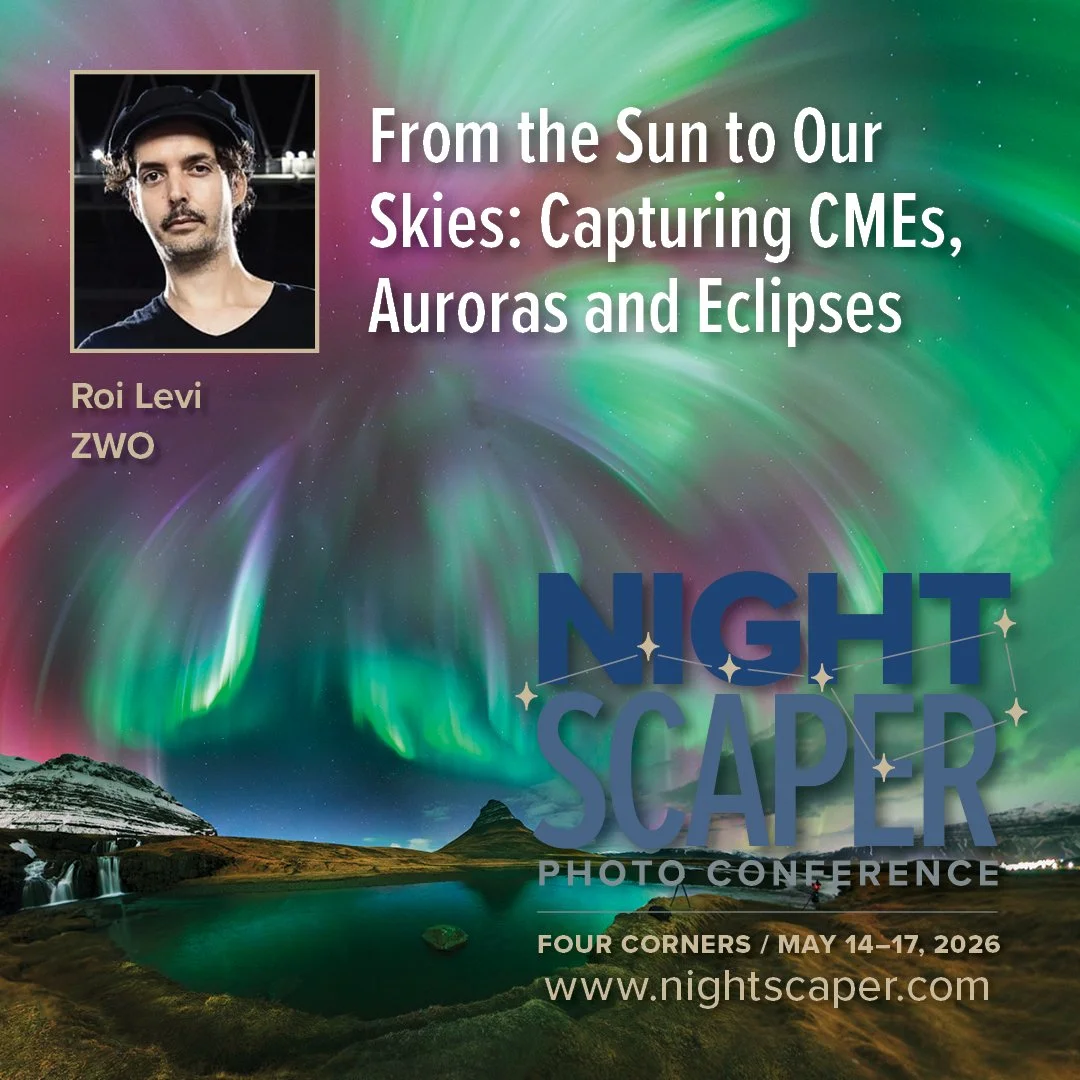
Roi Levi
This lecture will follow the full journey of space weather from the moment a coronal mass ejection (CME) erupts from the sun to the moment it ignites auroras in Earth’s skies. Roi Levi will break down how CMEs form, how to monitor solar activity in real time and how to capture these dynamic events using dedicated solar imaging systems, including hydrogen alpha techniques that reveal fine solar structures and eruptions.
You will learn how to interpret space weather data, how to track CME propagation, and how to understand the timing and science behind a solar eruption and its impact of incoming auroras on Earth. You’ll also receive practical tips on how to prepare for and capture auroras at peak intensity using large-scale panoramas and full-sky compositions to document the entire structure and motion of auroras and other celestial wavelengths such as H alpha during major geomagnetic storms.
Roi will also discuss using solar imaging techniques for eclipse photography, demonstrating how working with H alpha setups and switching to white-light filters translates into capturing the different phases of a solar eclipse with precision.
Beyond the technical side, Roi will share insights into storytelling through astrophotography, and how to connect landscape, light and celestial motion into a compelling visual narrative. Whether you’re chasing your first aurora or preparing for a major eclipse, this talk will deliver field-tested techniques, smart planning strategies and creative approaches to elevate your work.
Sponsored by ZWO
-
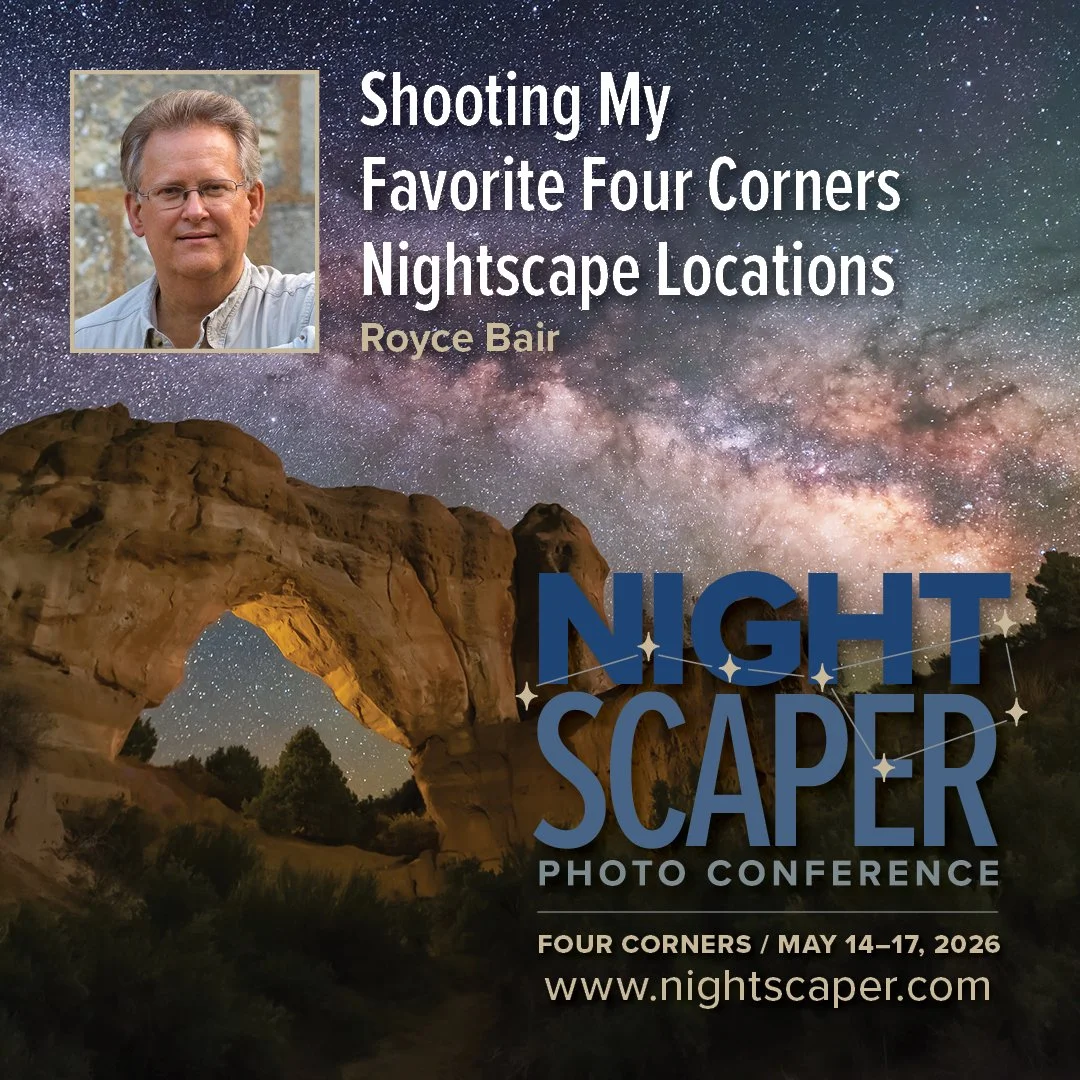
Royce Bair
Shooting My Favorite Four-Corners Nightscape Locations
Nightscaper conference location always offer loads of landscapes for going out to photograph the night after days filled education and conversation. Four Corners is no different! But where to go? Royce Bair is here to help.Although the Four Corners region is huge and technically includes parts of Utah, Colorado, Arizona and New Mexico, Royce will concentrate on nightscape locations within a 50-mile radius of the conference base in Farmington. He’ll discuss where these sites are located, what makes them fun to photograph and how he approached shooting them, as well as the challenges you'll need to overcome in order to have your best experience.
-
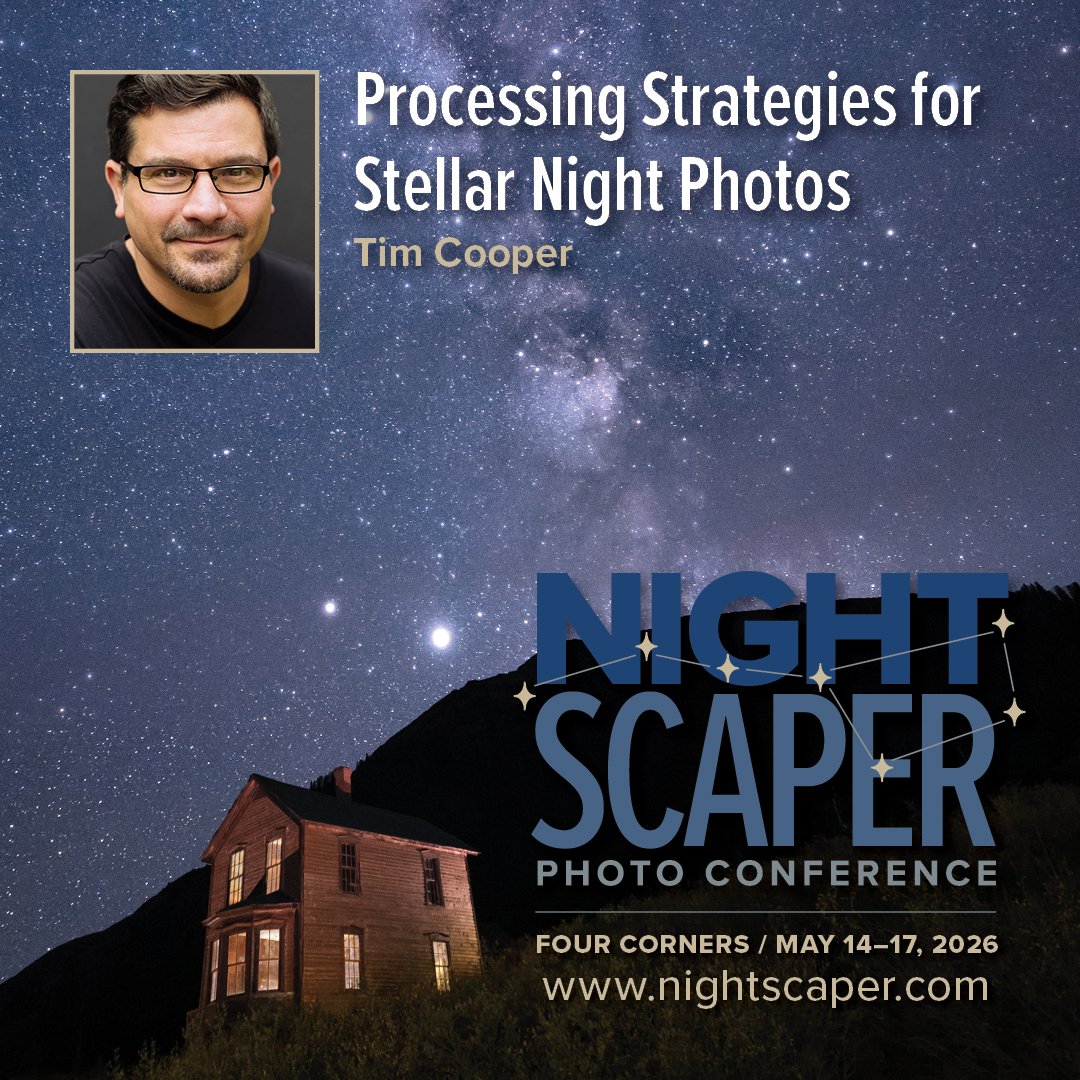
Tim Cooper
Processing Strategies for Stellar Night Photos
Ever wonder why your night photos don’t look like the ones you see online? It could be the processing, or lack thereof. In this talk Tim Cooper will describe the qualities of good night photos, will lay out processing strategies, will explain why and how the tools work, and will show you how to craft a powerful photograph.